
Featured Researcher — Juhi Bagaitkar, PhD
Featured Researcher — Juhi Bagaitkar, PhD 150 150 Katie Brind'Amour, PhD, MS, CHES

Juhi Bagaitkar, PhD, a principal investigator in the Center for Microbial Pathogenesis at the Abigail Wexner Research Institute (AWRI) at Nationwide Children’s Hospital, studies how immune cells and barrier epithelial cells (the cells that cover all internal and external surfaces in the body) protect…

read more

Novel Compound Shows Promise for Treating Nephrotic Syndrome
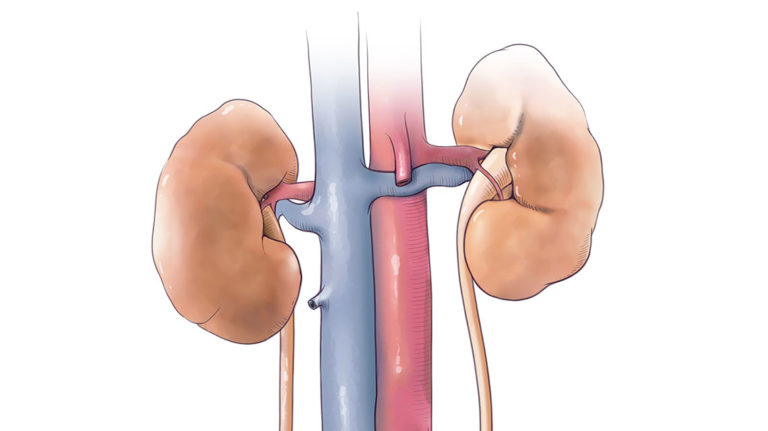
Novel Compound Shows Promise for Treating Nephrotic Syndrome 1024 575 Mary Bates, PhD

PPARγ selective modulator appear to be more efficacious in reducing proteinuria and comorbidities, and has fewer side effects than a traditional PPARγ agonist in a preclinical model of nephrotic syndrome. Nephrotic syndrome, characterized by high proteinuria, is one of the most common forms of…

read more
Girl sitting on a bench with her phone smiling.
Hydroxyurea Dose and Adherence Affect Hematologic Outcomes in Children With Sickle Cell Disease
Hydroxyurea Dose and Adherence Affect Hematologic Outcomes in Children With Sickle Cell Disease 1024 683 JoAnna Pendergrass, DVM

Optimal hydroxyurea dosing and medication adherence can improve hematologic outcomes for children with sickle cell anemia.   For pediatric patients with sickle cell anemia, hydroxyurea is highly effective at reducing disease complications. However, it can be challenging for these patients to take hydroxyurea for…

read more
sleeping infant
Nafcillin is a Safe Alternative to Vancomycin for Empirical Treatment of Late-Onset Sepsis Among Infants in the NICU
Nafcillin is a Safe Alternative to Vancomycin for Empirical Treatment of Late-Onset Sepsis Among Infants in the NICU 1024 681 Mary Bates, PhD

Guidelines to reduce vancomycin use at three Ohio NICUs did not impact mortality rate. In 2014, the Neonatal Antimicrobial Stewardship Program at Nationwide Children’s Hospital recommended nafcillin rather than vancomycin for empirical therapy of possible late-onset sepsis in infants without a history of methicillin-resistant…

read more
A More Efficient Method for Diagnosing Electrical Status Epilepticus in Sleep?
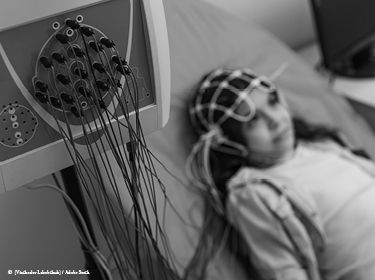
A More Efficient Method for Diagnosing Electrical Status Epilepticus in Sleep? 375 280 Mary Bates, PhD

Calculating the spike-wave index of the EEG of just the first 100 seconds of sleep is enough for diagnosis. Electrical status epilepticus in sleep (ESES) is an electrographic pattern in which epileptiform activity is dramatically activated by sleep. The ESES pattern is a key…

read more
When Functional Outcomes Are Achieved Post-Op, Do Patients and Families Care About Scarring?
When Functional Outcomes Are Achieved Post-Op, Do Patients and Families Care About Scarring? 1024 683 Abbie Miller

A recent editorial from Dr. Daniel DaJusta questions whether cosmetic concerns after surgery are primarily driven by surgeons, patients or parents. It is widely accepted that having a smaller, neater or less visible scar following surgery is a preferable cosmetic outcome to a large,…

read more
NASPGHAN: New Guidance for Surgical Procedure Selection in Pediatric Chronic Pancreatitis
NASPGHAN: New Guidance for Surgical Procedure Selection in Pediatric Chronic Pancreatitis 150 150 Katie Brind'Amour, PhD, MS, CHES

Informed, multispecialty decision-making is essential to give children with chronic pancreatitis the best chance for long-term pain relief and improved quality of life, according to new guidance issued by the North American Society for Pediatric Gastroenterology, Hepatology & Nutrition.   Chronic pancreatitis has long…

read more
Strategies and Resources for Managing Anxiety in Pediatric Patients
Strategies and Resources for Managing Anxiety in Pediatric Patients 1024 575 Katie Brind'Amour, PhD, MS, CHES

Anxiety disorders are one of the most common mental health diagnoses affecting children, making regular assessment and robust care resources essential to both primary and specialty care practices. Data from 2016-2019 report indicates that nearly 1 in 10 children ages 3-17 have ever been…

read more
Close up color photo of little boy holding hands on his belly
Is 3D Anorectal Manometry Preferable to Traditional Anorectal Manometry in Children With Functional Constipation?
Is 3D Anorectal Manometry Preferable to Traditional Anorectal Manometry in Children With Functional Constipation? 1024 680 Mary Bates, PhD

Study finds 3D-ARM is less comfortable and does not provide additional information compared to traditional ARM.   In a recent pilot study, researchers from Nationwide Children’s compared outcomes and patient experience of a new three-dimensional (3D) anorectal manometry (ARM) technique compared to regular ARM…

read more
Illustrations of clock faces at different times and angles
When Every Week Matters: Advancing a Treatment to the Clinic
When Every Week Matters: Advancing a Treatment to the Clinic 1024 491 Natalie Wilson

Researchers and regulatory experts bring a potential new therapy for a deadly neurodegenerative disease from IND application to clinical trial enrollment in a matter of weeks, setting a new standard in translating therapies from bench to bedside. In October 2021, the Office of Research…

read more
artistic rendering of an NK cell on a faded blue background with other cells faintly visible in the background
Optimizing the Body’s Natural Cancer Killers
Optimizing the Body’s Natural Cancer Killers 1024 649 Katie Brind'Amour, PhD, MS, CHES

Recent advances in the expansion and production of natural killer cells offers pediatric patients new hope for remission after high-risk cancer diagnoses. Natural killer (NK) cells are the innate immune system’s first line of defense for viral infections. Although these white blood cells don’t…

read more
How Does Allergic Disease Protect Against Developing Asthma After Viral Infection?
How Does Allergic Disease Protect Against Developing Asthma After Viral Infection? 1024 523 Mary Bates, PhD

Neutrophils and IL-4 are critical in preventing post-viral airway disease in mice with pre-existing allergic disease. In a new study, researchers from Nationwide Children’s Hospital show that in a mouse mode simulating human respiratory viral infection, pre-existing allergic disease prevents the development of asthma…

read more
artistic rendering of an NK cell on a faded blue background with other cells faintly visible in the background
Making (Lots of) NK Cells
Making (Lots of) NK Cells 1024 649 Katie Brind'Amour, PhD, MS, CHES

When Dean Lee, MD, PhD, joined Nationwide Children’s and The Ohio  State University Comprehensive Cancer Center in 2016, the institutions gave him leadership of a joint program: the Cellular Therapy and Cancer Immunology Program (CTCI), which serves to develop research efforts into clinical care…

read more
Moving Emergency Medicine Research Forward
Moving Emergency Medicine Research Forward 1024 614 Abbie Miller

Utilizing exception from informed consent studies and a national network of emergency medicine experts, clinician-scientists are advancing research to uncover best practices and improve care. Exception from informed consent (EFIC) is a special rule set utilized by the U.S. Food and Drug Administration (FDA)…

read more
Improving Racial Diversity and Equity in Clinical Trials
Improving Racial Diversity and Equity in Clinical Trials 1024 511 Jeb Phillips

There is now broad consensus across medicine that clinical trials must be more representative of minority populations. How can that be achieved? Last year, a group of Nationwide Children’s Hospital neonatologists published an unusually pointed critique of racial and ethnic representation in neonatal clinical…

read more
Engineered Viruses Help the Immune System Target Cancer Cells
Engineered Viruses Help the Immune System Target Cancer Cells 1024 623 Lauren Dembeck

The seemingly unlikely “partnership” leads to strong antitumor responses in pediatric tumor models. A recent study from researchers at Nationwide Children’s Hospital, published in the Journal for Immuno Therapy of Cancer, describes how a type of viroimmunotherapy activates the immune system to preferentially target…

read more
test tube of blood held in gloved hands
SARS-CoV-2 RNA in the Blood is Associated With Worse Outcomes in Kids
SARS-CoV-2 RNA in the Blood is Associated With Worse Outcomes in Kids 1024 575 Katie Brind'Amour, PhD, MS, CHES

Researchers have identified a risk factor for more severe illness in children with COVID-19: detectable levels of SARS-CoV-2 RNA circulating in the blood. Children with detectable SARS-CoV-2 RNA in the blood, called RNAemia, were more likely to require oxygen and be admitted to the…

read more
Featured Researcher — Diana Thomas, MD, PhD
Featured Researcher — Diana Thomas, MD, PhD 150 150 Katie Brind'Amour, PhD, MS, CHES

Diana Thomas, MD, PhD, joined the Biopathology Center (BPC) at Nationwide Children’s Hospital as its pathology operations director in 2021. Since then, she has been busy supporting research protocol development and the receipt, processing, banking and distribution of biospecimens for clinical and research investigators…

read more
Multi-Disciplinary Team Develops Evidence-Based Guidelines for Acute Management of Persistent Pulmonary Hypertension in Newborns
Multi-Disciplinary Team Develops Evidence-Based Guidelines for Acute Management of Persistent Pulmonary Hypertension in Newborns 200 133 Katie Brind'Amour, PhD, MS, CHES

What began as an internal effort to simplify practice has transformed into published evidence-based guidelines to standardize care for acute stabilization and management of newborns with pulmonary hypertension.   Persistent pulmonary hypertension of the newborn (PPHN) is a highly varied and changeable condition that…

read more
Perceptions About Type 2 Diabetes Differ Among Adolescent Patients, Parents and Physicians
Perceptions About Type 2 Diabetes Differ Among Adolescent Patients, Parents and Physicians 1024 683 JoAnna Pendergrass, DVM

Differing perceptions about type 2 diabetes among teens, parents and physicians can create barriers to diagnosing and managing the disease.   Type 2 diabetes (T2D) is becoming increasingly prevalent in adolescents, with a median age of diagnosis of 13.5 years in the pediatric population.…

read more