
Meeting the Challenge of Clinical Trial Recruitment and Retention
Meeting the Challenge of Clinical Trial Recruitment and Retention https://pediatricsnationwide.org/wp-content/uploads/2026/04/W1909850-Rsrch_PedsNW-SpringSummer2026_Pg-28-header-1024x483.jpg 1024 483 Lynn Dosky https://pediatricsnationwide.org/wp-content/uploads/2026/04/070824BT009-Lynn-profile-crop.jpg
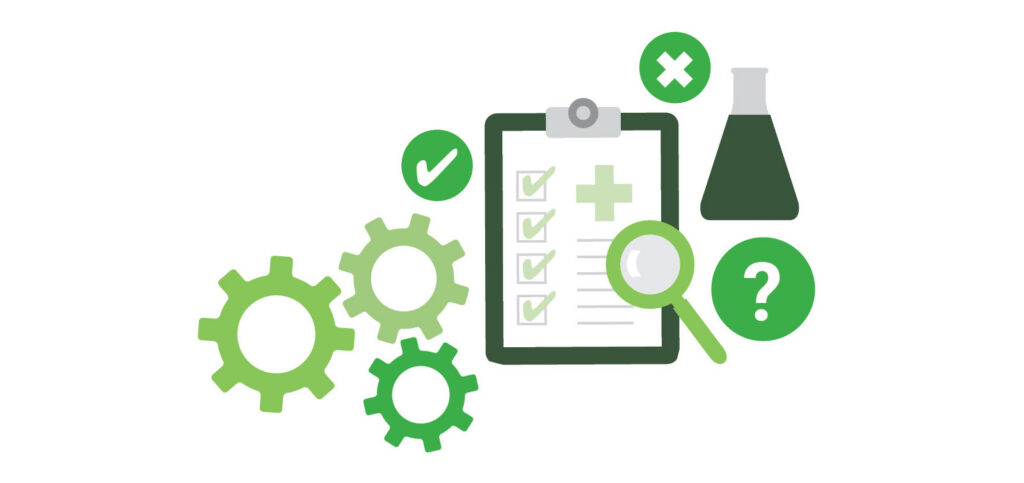
Participant recruitment and retention strategies are crucial features of any successful clinical study design.
In fact, an article published in the Journal of Clinical and Translational Science noted, “up to 85% of clinical trials fail to recruit or retain a sufficient sample size, leading to failures to meet accrual targets in four out of every five trials, even though nearly $1.9 billion is spent on recruitment annually.” In other words, insufficient recruitment or retention planning can be a costly error.
Digital media, shifting patient communication preferences and the lingering effects of the COVID pandemic are just some of the factors contributing to the need for creative new recruitment and retention strategies.
For Nationwide Children’s Hospital, integrating research and clinical care remains at the heart of its strategic plan. This integration and successful planning helps to get cutting-edge treatments to families. More than 3,100 clinical studies are currently open, and a second institutional review board (IRB) was recently established to accommodate the increased trial activity.
These experts share what has worked to keep their research program growing, evolving and achieving recruitment and retention goals. With a solid understanding of target populations and making participants and their families the priority, recruitment and retention can be less burdensome and more successful.
Where to Get Started: Feasibility, Accessibility and Communication Tactics
When planning a protocol, it is essential to think about what is feasible and how to achieve recruitment and retention goals.
“Think of feasibility first and build it into the protocol, including realistic volumes, conversion rates and staffing. Don’t overestimate eligibility numbers before you start,” says Smitha Sasindran, MS, MBA, senior research program manager for the Center for Biobehavioral Health at Nationwide Children’s and pediatric administrative director of the Clinical and Translational Science Institute at Nationwide Children’s and The Ohio State University.
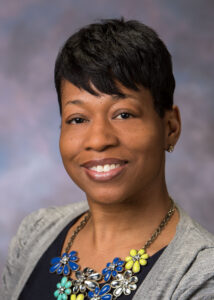
Myeshia Harmon, MHA, CCRP, PRAM, senior administrative director for clinical research operations
“We review data early to make sure a study can realistically meet its recruitment and retention goals. Launching a clinical trial takes significant planning, and success depends on enrolling and keeping participants,” says Myeshia Harmon, MHA, CCRP, PRAM, senior administrative director of clinical research operations for Clinical Research Services at Nationwide Children’s. “If enrollment falls short, sponsors may not invite our site to participate in future studies. If families do not feel supported or informed, they may choose to leave the study. We are responsible for guiding families through the informed consent process, making sure they understand the study and feel comfortable.”
Once the research team understand what is realistic, they can think about how to make it easier for people to participate.
Convenience and accessibility, both to reach a target audience and schedule study visits, are crucial to reduce visit burden, make it workable for participants with flexible scheduling, and align visits with routine care when possible.
Then, think about which tactics will help best reach the target audience. Will printed flyers or brochures handed out in clinic be enough, or will the team need to consider a multi-channel approach that combines digital media, adding the study to online registries such as ResearchMatch or clinicaltrials.gov, coordinating with patient and family advocacy groups, and community outreach?
These types of questions can help determine how to best reach the target population.
Community-Engaged Research Approaches
According to Cynthia A. Gerhardt, PhD, chief clinical research officer at the Abigail Wexner Research Institute at Nationwide Children’s, study recruitment often focused on reaching patients and parents directly at the hospital bedside, in clinic or other in-person methods, but COVID vastly changed access and required investigators to pivot strategy.
Families now might be less likely to answer direct calls or email recruitment but may respond to a text or social media contact, such as Facebook ads or closed Facebook groups, she says. Others are more responsive to community-based engagement through trusted leaders or advisers in their local area.
The Yale School of Medicine defines community-engaged research as “a process that incorporates input from people who the research outcomes will impact and involves such people or groups as equal partners throughout the research process. This involvement may include co-designing research questions to solve problems, make decisions, influence policies and create programs and interventions that affect their own lives.”
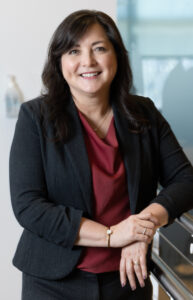
Cynthia Gerhardt, PhD, chief clinical research officer at Nationwide Children’s
“We often work with community leaders to gain access to specific populations to design research that accommodates the population’s language, culture and needs,” says Dr. Gerhardt. “When you have a community member who is vouching for the work you are doing, it builds trust, encourages others to participate and lowers barriers for better representation. Working with community stakeholders and community advisory boards helps to guide researchers toward what families would be willing to do and gain access to closed groups.”
“Funding agencies such as PCORI (Patient-Centered Outcomes Research Institute) have really focused on community advisory boards to engage the community in designing studies that are important to the population and making sure they are a part of interpreting results. This helps make the study easier to implement,” she adds.
Take Advantage of Internal Resources
The Clinical and Translational Science Institute (CTSI) is a partnership between Ohio State and Nationwide Children’s to speed the translation of scientific discoveries into clinical therapies to improve human health for all. Under the National Institutes of Health (NIH), the National Center for Advancing Translational Sciences (NCATS) supports the Clinical and Translational Science Awards (CTSA) Program. The CTSI is part of a national network of more than 60 leading medical institutions that receive CTSA funding. The CTSI offers researchers support with grant writing, funding, community engagement, recruitment, retention and more.
With CTSA Program funding, these institutions provide expertise, resources and collaborative partnerships at both the national and local levels to strengthen the health of individuals and communities. In addition, the CTSA Program advances the field of clinical translational science by offering education, training and career development opportunities across all stages of professional growth.
Many institutions also have internal resources to assist investigators and study teams. Megan Robb, BA, ACRP-CP, is a senior training and compliance coordinator with Clinical Research Services at Nationwide Children’s. One of her many tasks is working with research teams to promote investigator-initiated trials and industry-sponsored clinical trials.
While she starts with the same checklist to make sure investigators understand all the steps involved, when it comes to recruitment and retention, her team advises having a plan A, B and C in place before taking anything to the IRB to prevent any delays in study approval. Any piece of information used for recruitment must be approved by the IRB before it is presented to a potential participant.
Evolve Tactics to Meet Participant and Family Needs
To reach a wide audience, past recruitment tactics could have included flyers posted in public areas, phone calls or direct mail to certain zip codes. Digital marketing, social media advertising and electronic health record messaging have allowed more direct targeting for specific patient populations.
“Now it’s much more patient-centered and operationalized: designing trials around what people can realistically do; using multiple channels; and being intentional about trust, representation and accessibility,” says Sasindran. “There’s also a bigger emphasis on inclusive enrollment — not just hitting sample size but making sure participants are demographically representative. And in general, recruitment today is less about posting a study and more about building a study people can join and stay in.”
This includes designing the study with the family in mind. Experts suggest keeping scheduling flexible. Add QR codes for access to videos, online surveys or websites. Write information in plain language so it’s easy for the family to understand and remember. Make sure potential participants (including all family members you approach) fully understand the study, what will happen and how it will benefit them. This direct interaction is important and helps with retention. When a member of the study team meets with the family, it can mean more than a message through an online patient portal or email. Finding the right level of interpersonal connection is important.
“It is a partnership and families are part of that process. If there is part of that study that is cumbersome and a family wants to withdraw because the study isn’t conducive to their lifestyle, we want to know about it. Providing that feedback to the study team is important. Patients and families come first,” says Harmon. “When we take the time to connect with families during the recruitment process, it not only increases the likelihood of participation in the current study but also helps make research more understandable and less intimidating. I believe this approach reduces anxiety and builds trust, so that when families are approached for future studies, the experience feels less overwhelming and they may be more inclined to take part,” says Robb.
Moving from a Physician Approach to a Team Approach
Harmon adds that recruitment strategy has pivoted from physician driven to a collaborative team approach.
“We have a comprehensive team that meets and discusses what studies are open and available. Research staff and nurses are integrated with the medical team as part of clinical care when rounding to see inpatients on the floor. This has always been part of operations in hematology-oncology but is now more common in many other medical specialties. Research coordinators and research nurses are part of the integrated medical care team. Where appropriate, coordinators and nurses are trained to consent as part of medical care and can provide support if a patient has questions about a particular study,” says Harmon.
Evolving from a physician-driven recruitment model to a collaborative team approach marks a shift to integrating clinical care with clinical research. By embedding research coordinators, nurses and support staff directly into clinical care workflows, institutions can create a more seamless, responsive and patient-centered experience.
Effective clinical trial recruitment and retention ultimately depend on thoughtful planning, genuine community partnership and a commitment to meeting families where they are. By prioritizing feasibility, accessibility and clear communication, research teams can design studies that are not only scientifically rigorous but also realistic and respectful of participants’ lives. As digital outreach evolves and community-engaged approaches become increasingly essential, institutions that embrace flexibility, trust building and team-based collaboration will be best positioned to sustain strong enrollment and long term engagement.
This article appeared in the 2026 Spring/Summer print issue. Download the issue here.
Reference:
Idnay B, Fang Y, Butler A, Moran J, Li Z, Lee J, Ta C, Liu C, Yuan C, Chen H, Stanley E, Hripcsak G, Larson E, Marder K, Chung W, Ruotolo B, Weng C. Uncovering key clinical trial features influencing recruitment. Journal of Clinical and Translational Science. 2023 Sep 4;7(1):e199.
Image credits: Nationwide Children’s
About the author
Lynn Dosky, BSJ, is the managing editor of consumer and patient content at Nationwide Children’s Hospital. Her role in medical and science communications includes health literacy, patient experience and clinical study recruitment. She oversees writing and editing for self-referral service lines; collaborates with patient education and the chief patient experience officer; and serves as communication lead with the Family Advisory Council. She is a certified health literacy specialist and SEO copywriter.
- Lynn Doskyhttps://pediatricsnationwide.org/author/lynn-dosky/