

A New Therapeutic Era for Sickle Cell Disease
A New Therapeutic Era for Sickle Cell Disease https://pediatricsnationwide.org/wp-content/uploads/2026/09/Gold-Circles-1024x320.jpg 1024 320 Katie Brind'Amour, PhD, MS, CHES https://pediatricsnationwide.org/wp-content/uploads/2021/03/Katie-B-portrait.gif

Transformative therapies, coupled with novel approaches to supportive care, provide increasing hope for a normal life.
For more than 100 years, progress in sickle cell disease (SCD) treatment has been slow. Its mainstay treatment, hydroxyurea, approved about 30 years ago, is a repurposed cancer drug.
Its first curative therapy, allogeneic hematopoietic stem cell transplant (HSCT), was discovered by accident in 1984, when a little girl with SCD developed leukemia and was treated with a bone marrow transplant that cured both conditions.
Even the approval of other therapies has had limited impact on disease trajectory for patients with SCD; crizanlizumab was removed from the market in Europe for lack of efficacy, and voxelotor was withdrawn from markets worldwide in 2024.
SCD experts lament the longstanding lack of funding and therapies in this field. But with the approval of two gene therapies in 2023 — and numerous others in various stages of development — sentiments are shifting. For the first time ever, there’s a reason to believe most patients will soon have ample options to help them live a long, full life.
Understanding the Science of Sickle Cell Gene Therapy
SCD is hereditary and monogenic, caused by a point mutation in the β-globin gene. Since 2006, all U.S. states have been screening newborns for sickle cell trait — where a child has inherited one faulty copy of the gene but has one normal copy — and SCD. Early and even prenatal diagnosis are possible, and treatments such as prophylactic penicillin can be initiated soon after birth. Conditions like this, with straightforward heredity and established screening pathways, make the perfect candidates for gene therapy.
Despite the theoretical suitability, research takes time. Multiple approaches have emerged, with two commercially available treatments approved to date:
- The first, employed by CASGEVY®, uses CRISPR/Cas9 gene editing technology to modify cells ex vivo. The therapy disables a gene called BCL11A that normally stops the production of fetal hemoglobin. As the body begins producing its own healthy fetal hemoglobin, the proportion of sickle cell hemoglobin is reduced dramatically, relieving SCD symptoms and allowing patients to maintain healthy hemoglobin levels without relying on blood transfusions.
- Another approach is taken by LYFGENIA®, which uses a lentiviral vector to deliver an engineered gene into patients’ cells, also via ex vivo therapy, so they can start to produce a modified β-globin gene. The modified gene helps prevent sickling, allowing the patient’s new red blood cells to function like healthy adult hemoglobin.
Other methods are now in clinical trials:
- The RESTORE trial uses a CRISPR/Cas9 gene editing technology to directly correct the sickle cell mutation, converting cells from sickle type to healthy adult hemoglobin. It varies from other methods in that it uses homology-directed repair to precisely swap out the abnormal gene for a normal one.
- The recently concluded BEACON trial evaluated BEAM-101, a first-in-class base-editing therapy for sickle cell disease. By modifying a patient’s own stem cells to increase fetal hemoglobin production, the therapy aims to prevent red blood cell sickling and provide a durable, potentially curative treatment option. Early results have been encouraging, demonstrating robust fetal hemoglobin induction and improvement in disease-related complications.
Additional pharmaceutical strategies are in the preclinical or clinical phase as well, including fetal hemoglobin inducers, pyruvate kinase activators, hemoglobin polymerization inhibitors, anti-inflammatory agents and targeted adhesion inhibitors.
Investigators have also been improving the state of sickle cell care through studies on fertility preservation, vitamin supplementation, vaccination strategies and transition care planning. ClinicalTrials.gov shows more than 200 trials in SCD currently recruiting or planning to enroll.
From Clinical Trials to Clinical Therapy
The effort and innovation required to bring a gene therapy to patients does not stop once the treatment is developed and commercialized.
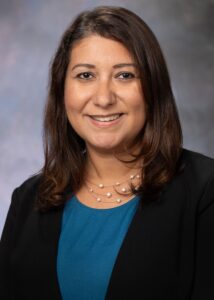
Diana Bharucha-Goebel, MD
“Delivering approved gene therapies requires careful consideration of all of the safety and efficacy data from clinical trials as well as any post-marketing data available. We carefully review the health status for each patient and discuss the potential risks, benefits and treatment alternatives, and details of what the pre- and post-gene transfer care will look like to aid families when they are considering whether gene therapy is right for them,” says Diana Bharucha-Goebel, MD, medical director of the Gene Therapy Center of Excellence at Nationwide Children’s, which was funded by the Germain Family Accelerator Program as a collaboration between the clinical and research arms of the hospital.
“Being operationally ready involves developing clinical protocols and consents, educating staff, preparing patients and families, navigating reimbursement and ensuring every service involved is ready to manage both expected and unexpected responses,” she says. “Our team uses this systematic approach for each existing and newly approved gene therapy that we provide, and we make sure we are always up to date on any emerging data in the field that may impact care or monitoring for our patients.”
Oversight by an experienced team with resources and education standards for participating staff helps ensure the full clinical picture is considered before a patient undergoes a single procedure.
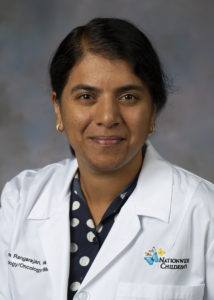
Hemalatha Rangarajan, MD
“You cannot pull this off without an excellent team,” Hemalatha Rangarajan, MD, hematologist on the Blood and Marrow Transplant clinical team and the Sickle Cell Clinic at Nationwide Children’s, says of both the clinical and research efforts related to gene therapy. Dr. Rangarajan spearheaded the hospital’s participation in trials for Casgevy as well as the RUBY trial (which used gene editing to promote production of fetal hemoglobin) and the RESTORE trial, while her colleague Anthony Villella, MD, led several recent non-gene therapy drug studies. “Everybody has to do their part. We have pharmacy support, insurance specialists, a gene therapy coordinator, transplant experts, cell therapy experts — the list goes on. We are very collaborative and we have the infrastructure and expertise. That’s why it works so well here.”
We used to visit other institutions to learn from their experience. But we’ve evolved into an efficient, experienced, high-performing team — and now we’re teaching others what we’ve learned.”
– Hemalatha Rangarajan, MD, hematologist on the Blood and Marrow Transplant clinical team and the Sickle Cell Clinic at Nationwide Children’s
Nationwide Children’s is one of only a handful of children’s hospitals in the country approved to offer both commercially approved SCD gene therapies. The in-house capabilities were honed with great effort during the full trajectory of the development and commercialization of two other approved gene therapies: ZOLGENSMA® and ELEVIDYS®.
The Gene Therapy Center of Excellence now helps clinical teams throughout the hospital establish processes and care protocols whenever a new clinical gene therapy becomes an option for Nationwide Children’s patients. The clinical research arm (Gene Therapy Operations team), housed in the Jerry R. Mendell Center for Gene Therapy in the Abigail Wexner Research Institute at Nationwide Children’s, shepherds investigators and clinicians through research ranging from in-house n-of-1 trials to investigator-initiated clinical trials and industry-sponsored late-phase trials.
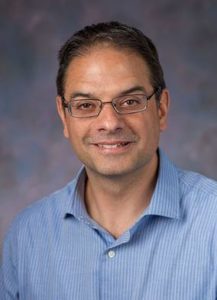
Anthony Villella, MD
“We’re at the level where not all gene therapies are viewed as the same,” says Dr. Villella, who is a hematologist and medical director of the Sickle Cell Clinic at Nationwide Children’s. “We understand the subtle advantages and disadvantages of different approaches, and we can thoughtfully match therapies or clinical trials to individual patients. It’s definitely not a one-size-fits-all process when we think about how best to treat our patients.”
The sickle cell team expects to dose their 20th patient by the end of 2026.
“We used to visit other institutions to learn from their experience,” says Dr. Rangarajan. “But we’ve evolved into an efficient, experienced, high-performing team — and now we’re teaching others what we’ve learned.”
Working Toward a Wealth of Options for All Patients
At present, approved gene therapies are only available to patients with classic SCD, which is caused by inheritance of two hemoglobin S (both producing sickled cells; HbSS). A secondary type, caused by inheritance of one HbS gene and one hemoglobin C gene (HbSC), has been entirely omitted from gene therapy trials to date.
Furthermore, not even every HbSS patient is a candidate for transformative therapies, due in part to their physically demanding preparation and follow-up. And even if patients are qualified, of the three current options — HSCT, Casgevy and Lyfgenia — none are 100% successful.
“That’s exactly why we need to keep studying and developing more therapies,” says Dr. Rangarajan. “If you look at the data, effectiveness is typically in the 92% to 95% range, which means there will always be patients who don’t respond as expected. Some continue to struggle with chronic pain. We still don’t know all the long-term answers. We are working toward a cafeteria of treatment options so we can choose the right therapy for the right patient.”
At about $3 million per treatment, gene therapies also remain out of reach for anyone without insurance approval and, realistically, for the vast majority of SCD patients globally.
Dr. Rangarajan is optimistic on that front, too.
“The field is moving incredibly fast,” she says. “Researchers around the world are already working toward non-chemotherapy approaches to gene therapy, in vivo gene therapies that could be delivered by infusion and other strategies that may ultimately make treatment more accessible and less toxic. We learn from every trial and every patient. The future is very bright. There truly is a light at the end of the tunnel for people living with sickle cell disease.”
As genetic and cellular therapies advance, Drs. Rangarajan and Villella’s goal is to make everything available to Nationwide Children’s patients, from the most basic drugs to outside of the Columbus area to obtain gene therapy. They also engage in diverse research on everything from fertility preservation to pain crisis management strategies and procedural improvements in therapy administration. the most advanced gene therapies and emerging clinical trials. The team proactively seeks out industry-sponsored studies and collaborates with other Ohio hospitals to enable patients based
“For a long time, many of us felt sickle cell disease was neglected,” says Dr. Villella. “Now we’re finally starting to rectify that. It’s really exciting to see this explosion of options.”
Dr. Rangarajan agrees.
“Our goal is that many of the patients we see today will grow to be survivors — people living normal lives because of these transformative therapies,” says Dr. Rangarajan. “We hope to reach a future where children born with sickle cell disease never have to know what it is truly like to live with its complications.”
“That day is coming,” she says. “And we’re very proud to be a part of it.”
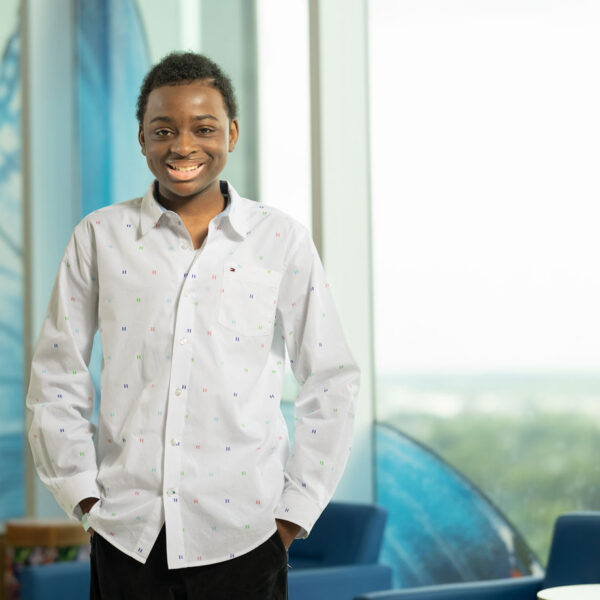
Therapy Fit for a King
In December 2025 12-year-old King Robinson became one of the youngest people in the United States to receive gene therapy for sickle cell disease. Read his story.
This article appeared in the 2026 Fall/Winter print issue. Download the issue here.
Reference:
Hanna R, Frangoul H, Pineiro L, McKinney C, Mapara M, Dalal J, Rangarajan HG, Atkins H, Sharma A, Chang KH, Jaskolka MC, Kim K, Yu Q, Mei B, Afonja O, Walters MC, for the RUBY Investigators. CRISPR-Cas12a gene editing of HBG1 and HBG2 promotors to treat sickle cell disease. New England Journal of Medicine. 2026;394:1281-1291. DOI: 10.1056/NEJMoa2415550
Image Credit: Nationwide Children’s
About the author
Katherine (Katie) Brind’Amour is a freelance medical and health science writer based in Pennsylvania. She has written about nearly every therapeutic area for patients, doctors and the general public. Dr. Brind’Amour specializes in health literacy and patient education. She completed her BS and MS degrees in Biology at Arizona State University and her PhD in Health Services Management and Policy at The Ohio State University. She is a Certified Health Education Specialist and is interested in health promotion via health programs and the communication of medical information.
- Katie Brind'Amour, PhD, MS, CHEShttps://pediatricsnationwide.org/author/katie-brindamour-phd-ms-ches/

- Katie Brind'Amour, PhD, MS, CHEShttps://pediatricsnationwide.org/author/katie-brindamour-phd-ms-ches/
- Katie Brind'Amour, PhD, MS, CHEShttps://pediatricsnationwide.org/author/katie-brindamour-phd-ms-ches/
- Katie Brind'Amour, PhD, MS, CHEShttps://pediatricsnationwide.org/author/katie-brindamour-phd-ms-ches/