
Filling a Critical Gap in Relapsed Sarcoma Treatment
Filling a Critical Gap in Relapsed Sarcoma Treatment https://pediatricsnationwide.org/wp-content/uploads/2026/02/AdobeStock_201155773-1024x683.jpeg 1024 683 Pam Georgiana https://pediatricsnationwide.org/wp-content/uploads/2023/07/May-2023.jpg
A first-in-sarcoma trial at Nationwide Children’s Hospital tests universal-donor NK cells with chemotherapy to address poor survival rates.
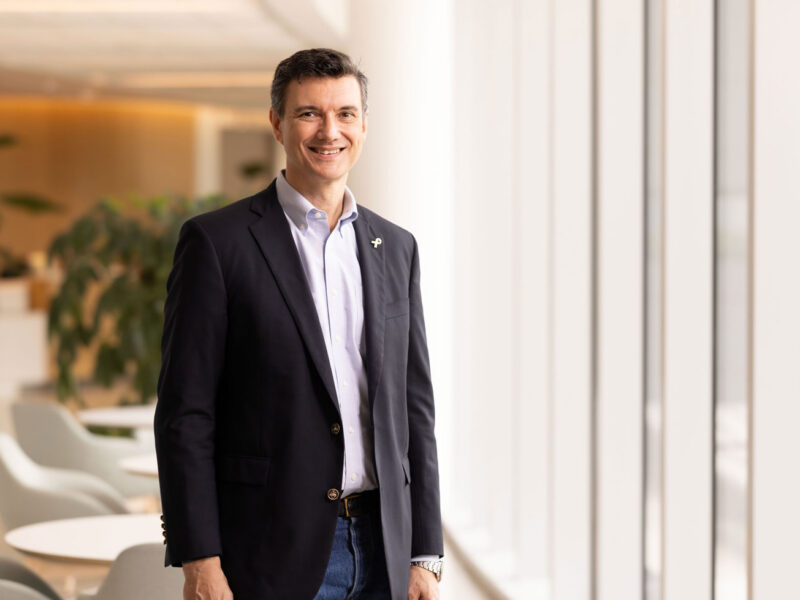
The five-year overall survival rate for children and young adults with relapsed bone or soft tissue sarcomas is between 17 and 26%. For Bhuvana A. Setty, MD, pediatric hematologist and oncologist at Nationwide Children’s Hospital, that reality is not acceptable.
“Relapsed sarcoma is one of the most difficult cancers to treat in children,” says Dr. Setty, who is also the director of the Clinical Sarcoma Team at Nationwide Children’s. “We need options that are not only different but meaningfully more effective.”
Dr. Setty is the principal investigator of a first-of-its-kind trial: A Multi-Institution Study of TGFβ Imprinted, Ex Vivo Expanded Universal Donor NK Cell Infusions as Adoptive Immunotherapy in Combination With Gemcitabine and Docetaxel in Patients With Relapsed or Refractory Pediatric Bone and Soft Tissue (TiNKS).
The TiNKS trial combines a standard chemotherapy regimen with an off-the-shelf natural killer (NK) cell product developed to function in the solid tumor microenvironment. The multi-site study completed its initial safety phase in 2024 and is now expanding to evaluate efficacy in select histologies.
From Clinical Need to Collaboration
Even after repeated treatment, Dr. Setty saw a clear pattern: despite the best available upfront protocols, patients with metastatic or relapsed sarcoma face poor outcomes.
“Patients who relapse have often already received years of therapy,” Dr. Setty says. “I wanted to find treatments designed specifically for those who have exhausted standard options and still have a significant disease burden.”
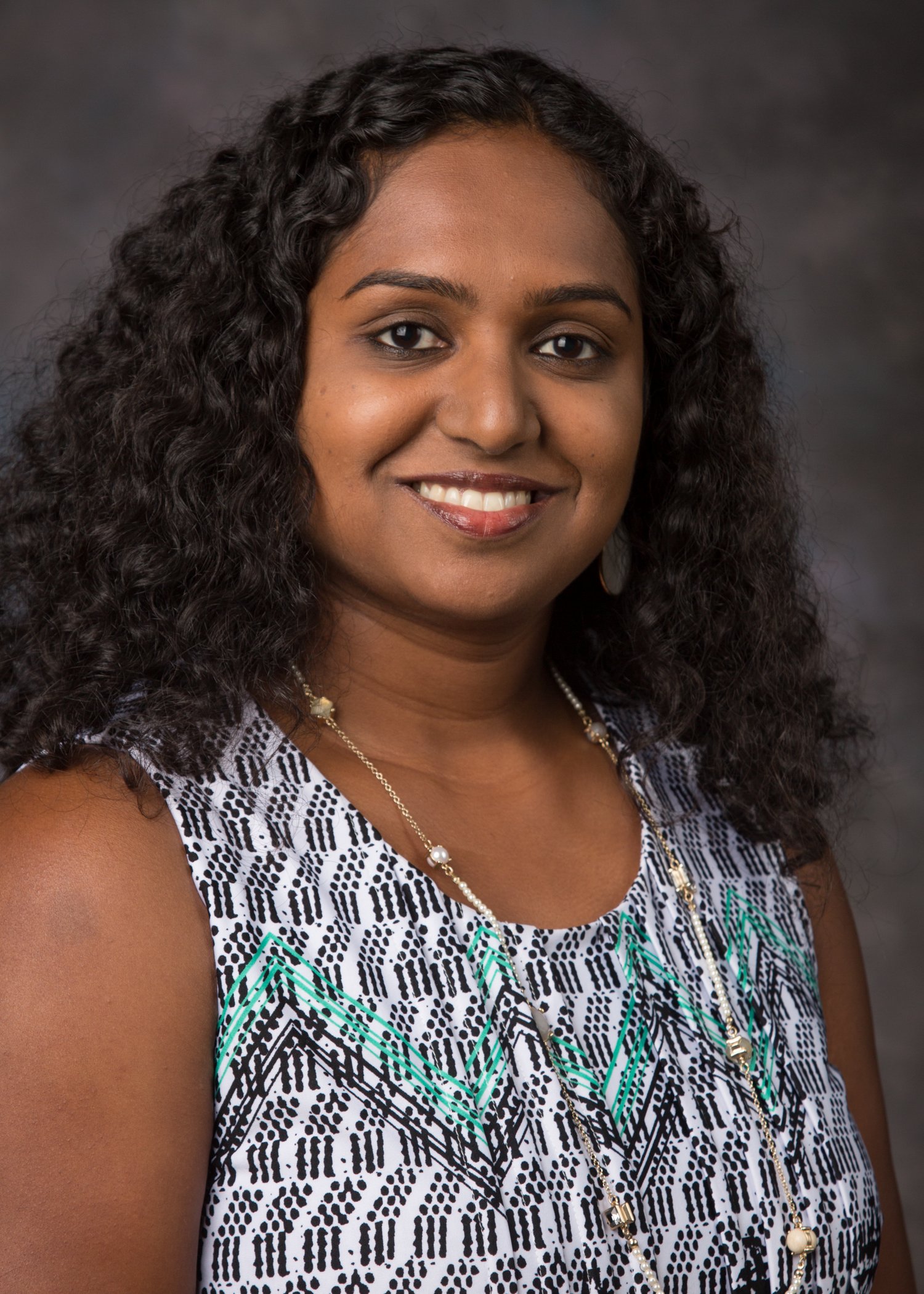

Collaborative discussions with Dean A. Lee, MD, PhD, director of the Cellular Therapy and Cancer Immunology Program at Nationwide Children’s, led to the development of a concept for a new chemo–immunotherapy strategy.
“NK cells are naturally wired to detect and kill abnormal cells, including cancer,” explains Dr. Lee. “The challenge is that standard NK cells live in the blood. Solid tumors sit in tissue, and their microenvironment is full of signals that suppress NK function. We needed NK cells that could enter tissue and stay active.”
Preclinical work in Dr. Lee’s laboratory focused on creating “tissue-mimicking” NK cells that could withstand transforming growth factor beta (TGFβ), a signaling protein that tumors use to weaken the immune response and that is common in sarcomas. The team developed a process to grow NK cells from healthy donors using specific activation signals and controlled TGFβ exposure. The result was TGFβ-imprinted (TGFβi) NK cells that migrate into solid tumors more effectively and continue working even when TGFβ is present.
“Once we had NK cells that could function inside solid tumors, the next step was to bring them into a clinical trial,” says Dr. Setty. “Our goal was to build a treatment plan that would give those cells the best chance to work.”
A First-of-Its-Kind Clinical Trial
The trial, funded through the National Pediatric Cancer Foundation, is the first sarcoma study to pair chemotherapy with universal-donor TGFβi NK cells.
Dr. Setty and Dr. Lee were the senior authors of an abstract presenting the results from Part 1 of the trial at the 2025 Society for Immunotherapy of Cancer Annual Meeting (SITC). The abstract was published in the November edition of The Journal for ImmunoTherapy of Cancer.
Prithy Martis, PhD, operations manager of the Biologics Manufacturing Resource (BMR) at Nationwide Children’s, presented the abstract on behalf of the clinical trial team at the SITC meeting. The BMR produces the NK cell product and ships it to participating centers as an off-the-shelf therapy.
Trial Design: Universal-Donor NK Cells Plus Chemotherapy
The trial enrolls patients ages 2 to 40 with relapsed or refractory osteosarcoma, Ewing sarcoma, rhabdomyosarcoma or other soft-tissue sarcomas who have measurable disease and have received no more than four prior cytotoxic therapy regimens.
All participants receive gemcitabine and docetaxel, a chemotherapy regimen selected for its broad activity in relapsed pediatric sarcomas and synergy with NK cells.
“There is a synergistic relationship between these two medications and NK cells,” Dr. Lee explains. “The chemotherapy essentially makes the tumor more sensitive to TGFβ-imprinted NK cells, which means they are more effective in killing cancer cells.”
The study is structured in two parts. Part 1 enrolled five patients in each diagnostic cohort to evaluate feasibility, safety and 6-month progression-free survival. Part 2, now underway, uses a two-stage design to further assess efficacy in cohorts that met predefined thresholds in Part 1.
Patients receive up to eight 21-day cycles of gemcitabine and docetaxel, each time followed by an NK cell infusion. Those who experience a complete response, partial response or stable disease may continue for eight more cycles with either the same combination or NK cells alone.
Promising Part 1 Results
Between October 2022 and August 2024, 20 patients were enrolled across nine sites. All had received two to four prior treatments. The combination of chemotherapy and NK cells proved feasible and generally well tolerated. The most common side effects included infusion-related reactions, fever, pleural effusion and generalized muscle weakness. Cytokine surges were uncommon and manageable.
“One of our early questions was whether we could safely give repeated NK cell infusions in addition to chemotherapy in a heavily pretreated population,” says Dr. Setty. “Being able to do that and see early signs of disease control was encouraging.”
The team evaluated six-month progression-free survival, accounting for progression, death or changes in therapy. In Part 1, the benchmark was met in three of four cohorts:
- 2 of 5 patients with Ewing sarcoma
- 1 of 5 patients with rhabdomyosarcoma
- 2 of 5 patients with non-rhabdomyosarcoma soft tissue sarcomas
“In a population where we typically expect rapid progression, these six-month progression-free survival rates were enough to justify moving into the second part of the trial,” Dr. Setty explains.
Part 2 is now enrolling additional patients in the three responsive cohorts, using a two-stage design that requires additional six-month progression-free survival events before full expansion.
Local Access to Advanced Off-the-Shelf Cell Therapy
A defining feature of this trial is the manufacturing and distribution model. All NK cells are created using a bank of cells from 11 rigorously selected healthy donors. One manufacturing campaign produces multiple doses that Dr. Lee’s team can ship on demand. There is no need for patient-specific collection or engineering.
“These are universal donor cells,” says Dr. Lee. “We do not have to produce a unique product for each patient. That lowers cost, speeds access and makes it realistic to distribute this therapy to treatment centers around the world.”
For patients and families, this translates into fewer disruptions during an already difficult time.
“Relapsed sarcoma patients spend time away from family and loved ones traveling for care,” notes Dr. Setty. “One of our priorities was to design a therapy that can come to the patient, instead of the other way around.”
In Part 1 alone, more than 100 TGFβ-imprinted NK cell doses were shipped and infused at nine locations. Additional centers are joining as Part 2 expands.
Building Toward Better Long-Term Outcomes
Longer term, the team hopes that an effective chemo/NK cell therapy for relapsed sarcoma could evolve into earlier treatment strategies for high-risk patients.
“Our immediate goal is to improve six-month progression-free survival,” says Dr. Setty. “If we can demonstrate a consistent benefit, the next step is to test whether utilizing this therapy earlier can shift five-year survival. Even a 15-to-20-percentage-point improvement would be significant and warrant use of this treatment more broadly.”
A Platform With Potential Beyond Sarcoma
Dr. Lee notes that this work is part of a larger NK cell platform in development for pediatric and adult cancers at Nationwide Children’s and The Ohio State University.
“Within our clinical community, researchers are applying the same principles to neuroblastoma and brain tumors in children, and melanoma, breast cancer and multiple myeloma in adults,” Dr. Lee says. “Our research will ultimately inform how clinicians deploy NK cells across many diseases.”
As Part 2 progresses, Dr. Setty and Dr. Lee remain focused on pairing scientific innovation with careful clinical evaluation.
“For families who have already been told they are out of standard options, introducing an immunotherapy-based approach brings a new sense of possibility,” says Dr. Setty. “Our responsibility is to ground that hope in strong science, rigorous testing and a commitment to broader access.”
Image Credit: Adobe Stock (header); Nationwide Children’s (portraits)
About the author
Pam Georgiana is a brand marketing professional and writer located in Bexley, Ohio. She believes that words bind us together as humans and that the best stories remind us of our humanity. She specialized in telling engaging stories for healthcare, B2B services, and nonprofits using classic storytelling techniques. Pam has earned an MBA in Marketing from Capital University in Columbus, Ohio.
- Pam Georgianahttps://pediatricsnationwide.org/author/pam-georgiana/

- Pam Georgianahttps://pediatricsnationwide.org/author/pam-georgiana/
- Pam Georgianahttps://pediatricsnationwide.org/author/pam-georgiana/
- Pam Georgianahttps://pediatricsnationwide.org/author/pam-georgiana/