

Technology and Parent Engagement Reduce Risky Driving in Teens With Traffic Violations
Technology and Parent Engagement Reduce Risky Driving in Teens With Traffic Violations https://pediatricsnationwide.org/wp-content/uploads/2026/06/AdobeStock_415372613-1024x683.jpeg 1024 683 Pam Georgiana https://pediatricsnationwide.org/wp-content/uploads/2023/07/May-2023.jpg
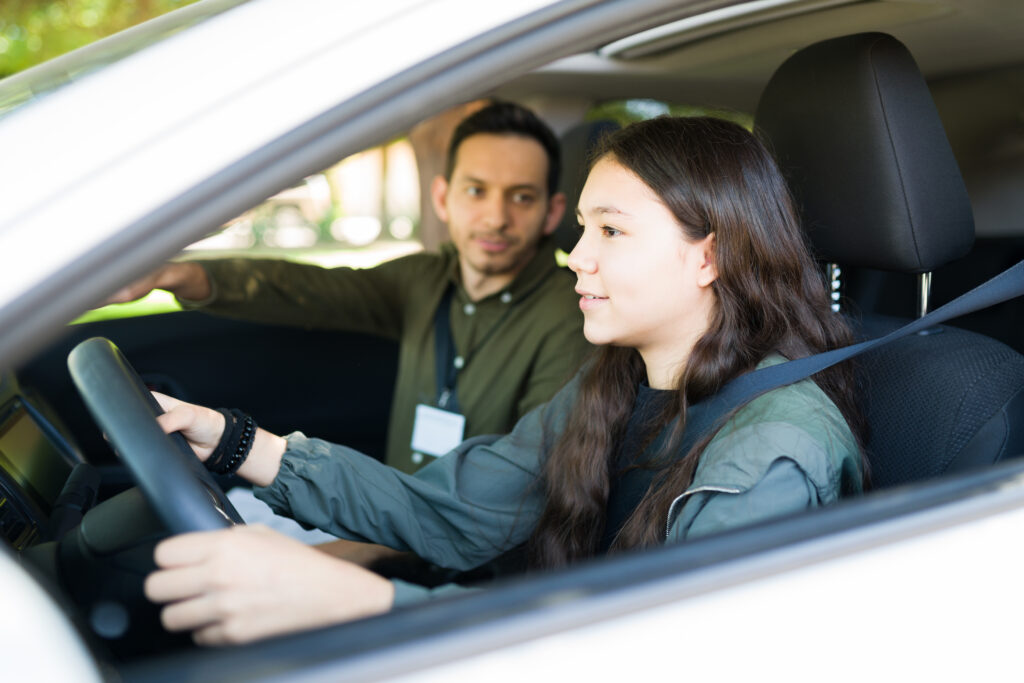
Randomized clinical trial assesses whether driving feedback technology, parent communication training or a combination reduces risky driving in teenagers with traffic violations.
Motor vehicle crashes are a leading cause of death for adolescents in the United States. Teen drivers who receive traffic citations represent a particularly high-risk population, with elevated rates of repeat violations, crashes and injury. Yet few evidence-based interventions exist for teens after they receive a citation.
A new randomized clinical trial published in JAMA Network Open, led by Jingzhen Ginger Yang, PhD, MPH, principal investigator in the Center for Injury Research and Policy in the Abigail Wexner Research Institute at Nationwide Children’s Hospital, tested whether in-vehicle driving feedback technology alone or combined with parent communication training could improve driving safety among these high-risk adolescents.
“Many teens are still learning how to recognize and respond to risky situations on the road,” says Dr. Yang. “A traffic violation creates an important opportunity to intervene and reinforce safe driving behaviors.”
The trial enrolled 240 parent-teen pairs from six Ohio juvenile traffic courts. Participants were randomized to one of three groups: a control group that received a monitoring device without feedback, a monitoring device with feedback group and a driving feedback plus parent training group.
“Because parents are required to attend traffic court with their teenagers, we saw an opportunity to turn that experience into a teachable moment, as well as gather data for our research,” Dr. Yang explains. “We wanted to understand both whether parental involvement and how parents responded to the situation could influence their teen’s future driving behaviors.”
The intervention used an in-vehicle monitoring device and a smartphone app that provide real-time feedback on risky driving behaviors. These behaviors include hard braking, sudden acceleration and excessive speeding. Teen drivers also received post-trip push notifications and biweekly performance reports. Parents in the training group received access to their teens’ driving reports, along with virtual communication training and tools to help guide conversations about safe driving.
Over the six-month study period, researchers analyzed more than 160,000 driving trips. Compared with teens in the control group, those who received driving feedback plus parent communication training had fewer risky driving events and spent less time speeding. Teens who received driving feedback alone also spent less time speeding, but they did not show a meaningful reduction in overall risky driving behaviors.
“The data tells us that parents play a central role in driving safety even after a teenager becomes independently licensed,” Dr. Yang explains. “Technology can provide feedback when parents are not in the vehicle, but its greatest impact occurs when it helps families have productive conversations about safe driving.”
The parent training focused on motivational interviewing techniques, encouraging parents to use open-ended questions, reflection and positive reinforcement rather than criticism. According to Dr. Yang, who is also a professor of Pediatrics at The Ohio State University College of Medicine, the goal was to help teenagers internalize the importance of safe driving rather than simply comply with parental expectations.
“We found that how parents talk to their teens is just as important as what they communicate,” says Dr. Yang. “The message is more effective when parents help teens understand why safe driving matters to them personally.”
The program also produced an unexpected benefit. Many participating families reported improved communication and stronger relationships.
Future studies will evaluate peer-led training models for parents of teens who have received citations, as well as gamification strategies designed to encourage safe driving behaviors before citations occur.
These results indicate that juvenile traffic courts may offer an important opportunity to engage both teens and parents in evidence-based interventions to reduce future crash risk.
“Learning to drive should not end when a teenager receives a license,” Dr. Yang says. “Continued parental involvement, supported by objective feedback and constructive communication, can help young drivers learn the skills needed to stay safe on the road.”
Reference:
Yang J, Zhang Y, Alshaikh E, et al. In-Vehicle Feedback With or Without Parent Communication Training and Teenage Driving Behaviors: A Randomized Clinical Trial. JAMA Netw Open. 2026;9(4):e268631. doi:10.1001/jamanetworkopen.2026.8631
Image credit: Adobe Stock
About the author

Pam Georgiana is a brand marketing professional and writer located in Bexley, Ohio. She believes that words bind us together as humans and that the best stories remind us of our humanity. She specialized in telling engaging stories for healthcare, B2B services, and nonprofits using classic storytelling techniques. Pam has earned an MBA in Marketing from Capital University in Columbus, Ohio.
- Pam Georgianahttps://pediatricsnationwide.org/author/pam-georgiana/

- Pam Georgianahttps://pediatricsnationwide.org/author/pam-georgiana/

- Pam Georgianahttps://pediatricsnationwide.org/author/pam-georgiana/

- Pam Georgianahttps://pediatricsnationwide.org/author/pam-georgiana/