
A Blueprint for Better Care: The Constant Drive for Quality Improvement in Primary Care
A Blueprint for Better Care: The Constant Drive for Quality Improvement in Primary Care https://pediatricsnationwide.org/wp-content/uploads/2026/09/Original_hi_res_JPG-062923BT326-1024x683.jpg 1024 683 Alaina London https://pediatricsnationwide.org/wp-content/uploads/2023/11/100923RH0019-e1699635391623.jpg
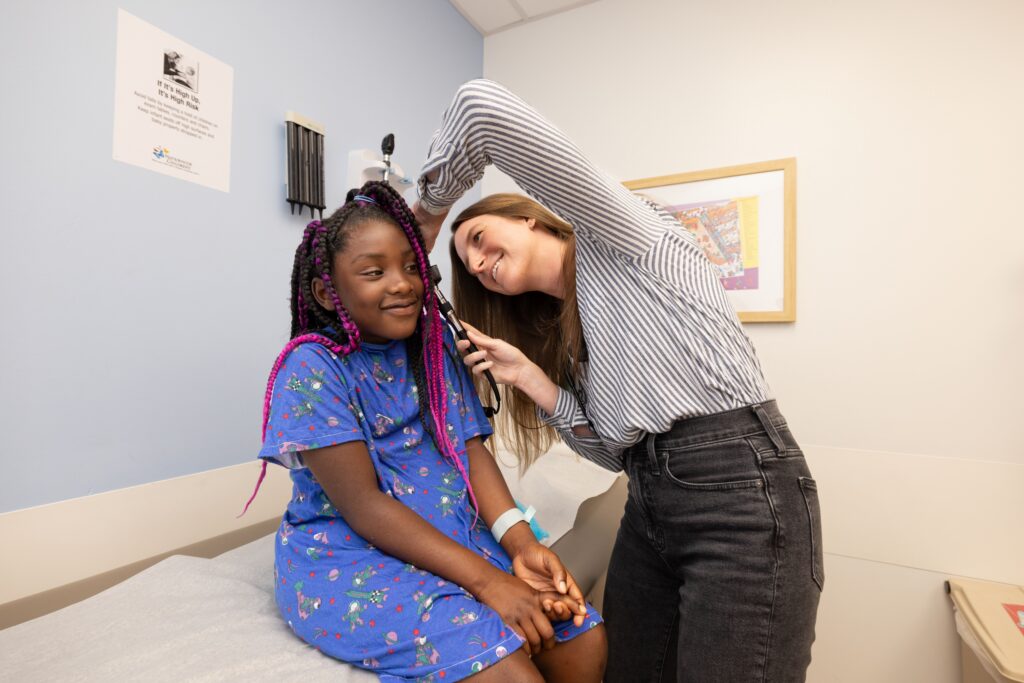
A culture of quality improvement at Nationwide Children’s Hospital has become the model of care for children across the country.
Every day, thousands of children walk through the doors of Nationwide Children’s Primary Care Centers for well visits, follow-up care, acute illness and so much more.
Across 14 primary care sites where more than 150,000 patients are seen, teams of physicians, advance practice providers, nurses, behavioral health providers, registration staff, data analysts, quality specialists, and many others, work together to develop and implement quality improvement (QI) projects. Some focus on chronic conditions such as asthma and ADHD while others improve developmental screening, adolescent mental health, vaccination rates or access to care. Together, they create a system where better outcomes aren’t left to chance — they’re designed.
“In primary care, we emphasize quality improvement as a key component of providing excellent patient care,” says Skyler Kalady, MD, section chief of Primary Care Pediatrics at Nationwide Children’s. “We always strive to maintain and grow our culture of continuous improvement.”
That culture has become not only a defining feature of Nationwide Children’s Primary Care but a model for other institutions across the country.
A Model for Quality Improvement
According to Dane Snyder, MD, former section chief of Primary Care Pediatrics and current associate chief medical officer for Ambulatory Services at Nationwide Children’s, one project became the blueprint for everything.
More than a decade ago, the Primary Care Network launched a comprehensive asthma QI initiative. Rather than relying on individual physicians to make isolated changes, the organization invested physician time and leadership into a coordinated effort that standardized goals, measured outcomes and provided regular feedback to every practice. The project became the blueprint for everything that followed.
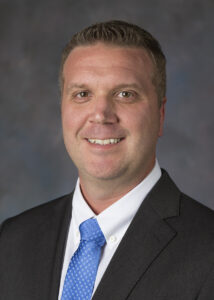
Dane Snyder, MD
“We really take a team approach,” Dr. Snyder says. “The asthma quality improvement project served as the model because it involved feedback to individual offices, standardized goals and input from every office and all members of the teams. That was really the inflection point.”
Today, projects are intentionally selected to improve care for the largest patient populations and address priorities across preventive care, chronic disease management and patient experience.
QI at Nationwide Children’s relies on collaboration among many individuals and partnerships with Partners For Kids and the Center for Clinical Excellence. Each perspective helps identify problems or solutions that others might miss.
Maintaining Excitement for Quality Improvement
Continuous improvement requires continuous participation, but maintaining enthusiasm for dozens of simultaneous projects isn’t always easy. In 2023, Dr. Snyder introduced an idea that transformed quality improvement into something unexpected: a competition.
Inspired by the NCAA basketball tournament, March Metric Madness pits primary care offices against one another in a four-week bracket competition. Each week features a different quality metric, and clinics compete to improve performance. The winning office earns a trophy, recognition and a celebratory afternoon complete with lunch and wellness activities.
The biggest surprise wasn’t that metrics improved during the competition, it was that they stayed improved.
“What surprised us was that by just focusing on it for one week, the improvements stuck,” Dr. Snyder says. “They’ve been maintained since we first held the competition three years ago.”
The initiative has since been presented nationally and replicated by other pediatric organizations, becoming another example of how Nationwide Children’s continues to influence QI beyond its own walls.
Success Beyond the Numbers
Behind every QI metric is a child and family whose experience is better because of the work happening behind the scenes.

Skyler E. Kalady, MD
“Our hope is that our patients get high-quality care regardless of what site they enter or what provider they’re seeing,” Dr. Kalady says. “We’re following best practice guidelines, and that’s usually the road to best outcomes.”
Patients with ADHD or asthma are coming to more follow-up appointments. There is an increase in safe sleep practices, and vaccination rates, specifically for HPV, continue to improve. Patients are completing visits more consistently and developmental screenings are helping identify autism earlier, allowing families to begin evaluation and intervention sooner.
But even as demand increases and more patients need to be seen, the commitment to quality remains.
The Continuous Improvement of Quality Improvement
Unlike many projects with a clear finish line, QI is intentionally ongoing. The blueprints are iterative and need to be refined. New national guidelines emerge. Community needs evolve. Patient populations change. The work continues.
“I think one thing that’s great about quality improvement is that you see successes but there are always more opportunities,” Dr. Kalady says. “By definition, it’s continuous improvement.”
For Dr. Snyder, that’s part of what makes the work so rewarding.
“What I love about QI is that it’s really about small steps,” he says. “You can make one small improvement, then build upon that with another. Oftentimes projects can be improved with something really small.”
Those small steps, multiplied across thousands of patient encounters every day, have become something much larger: a culture where every improvement, no matter how incremental, helps children receive safer, more consistent and more effective care.
Image Credits: Nationwide Children’s
This article appeared in the 2026 Fall/Winter issue. Download the issue here.
About the author

Alaina London (Doklovic) is a Marketing Specialist for Research Communications at Nationwide Children’s Hospital. She received her BS in medical anthropology and English from The Ohio State University. Her passions for science and health, combined with her desire to help others, motivated her to pursue a career in which she could actively help improve patient outcomes and scientific research through writing.
- Alaina Londonhttps://pediatricsnationwide.org/author/alaina-london/

- Alaina Londonhttps://pediatricsnationwide.org/author/alaina-london/
- Alaina Londonhttps://pediatricsnationwide.org/author/alaina-london/
- Alaina Londonhttps://pediatricsnationwide.org/author/alaina-london/