

Pioneering Investigations in Renal Urothelium: Q & A With Ashley R. Jackson, PhD
Pioneering Investigations in Renal Urothelium: Q & A With Ashley R. Jackson, PhD https://pediatricsnationwide.org/wp-content/uploads/2026/10/Original_hi_res_JPG-100224SK0588-scaled-e1793128149298-1012x1024.jpg 1012 1024 Gina Vitale, PTA https://pediatricsnationwide.org/wp-content/uploads/2025/04/IMG_1961-cropped-Gina-profile.jpg
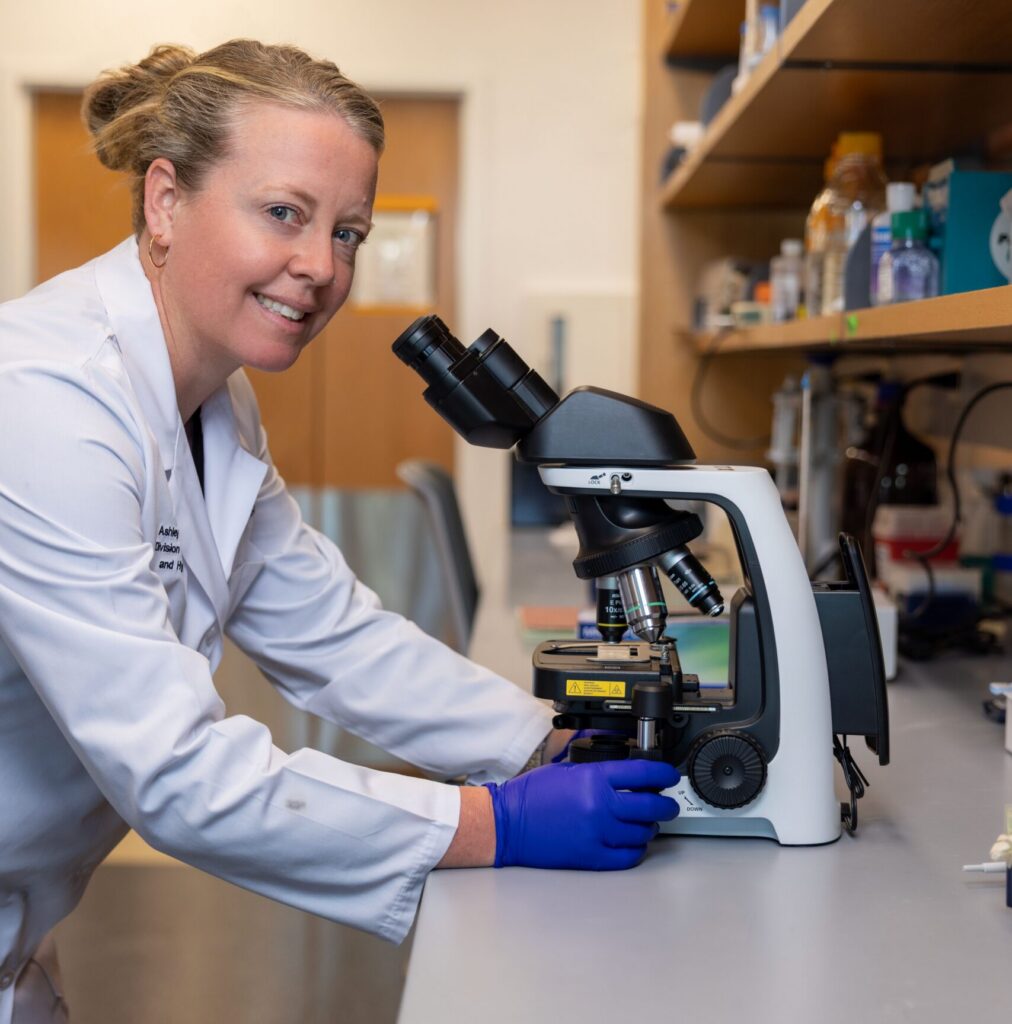
Urinary Tract Obstruction (UTO) is a leading cause of pediatric chronic kidney disease (CKD) and kidney failure. Nationwide Children’s Hospital nephrologists, urologists and researchers combine efforts to investigate how the kidney responds to obstruction and how that response might inform new approaches to treatment of pediatric UTO. Ashley Jackson, PhD, principal investigator in the Kidney and Urinary Tract Center, member of the Division of Pediatric Nephrology and Hypertension at Nationwide Children’s Hospital, and assistant professor in the Department of Pediatrics at The Ohio State University, recently received an NIH R01 grant to study the renal urothelium – the specialized lining of the kidney’s urinary space.
We spoke with Dr. Jackson about how renal urothelium senses obstruction, adapts to mechanical stress and may help protect the obstructed kidney.
Your team is studying PIEZO1, a protein that senses mechanical forces. What led you to suspect it helps trigger urothelial remodeling?
A urinary tract obstruction is a problem with urine flow. The kidneys produce urine, which normally flows down towards the bladder and out of the body. When that flow is obstructed, urine accumulates upstream – increasing pressure and stretching the kidney’s collecting space.
That fostered a new train of thought about increased pressure from kidney distension: we know the renal urothelium changes in response to obstruction, but what triggers it? Is it a signal in the urine? Or does the urothelium itself have an innate property that senses increased mechanical forces? The PIEZO class of mechanosensors or mechanoreceptors converts physical cues into signals within cells. When we found that renal urothelial cells express PIEZO1, it became a compelling candidate. Our grant investigates whether PIEZO1 helps initiate that response and how it influences kidney injury.
What have you learned so far about whether that remodeling protects the kidney?
I began studying the kidney’s response to obstruction as a graduate student. Being at Nationwide Children’s meant I could interact daily with nephrologists and urologists in a space where clinical questions became science-level experiments. Using mouse models, we discovered that the renal urothelium undergoes substantial remodeling during obstruction. One change was increased production of uroplakins — specialized proteins found in mature urothelial cells of the bladder — the urinary tract’s experts in urine storage. We didn’t know if this response was helpful or harmful, so we disrupted uroplakins and purposely obstructed the kidney. Subjects exhibited worse outcomes, indicating that urothelial remodeling is an adaptive response that helps protect the kidney.
The grant also focuses on PPARγ. Can you explain its role and how it regulates the urothelium’s response to obstruction?
The PPARγ signaling pathway is a key regulator of urothelial differentiation in the bladder and ureter, but its function in renal urothelium is largely unexplored. We found that PPARγ is uniquely expressed in the renal urothelium of the obstructed kidney, but not at baseline. From there, we used mouse models to test what happens when we delete or activate PPARγ in urothelial cells. Activating PPARγ during obstruction enhanced urothelial differentiation and limited parenchymal injury, supporting the conclusion that PPARγ is an important regulator of protective renal urothelium remodeling.
The grant builds on this work by investigating what induces or activates PPARγ and which downstream genes carry out its effects. We will also test whether pharmacologic approaches to activate PPARγ influence urothelial differentiation and kidney protection.
How could your work eventually help clinicians identify children at greater risk of kidney damage or point toward new treatments?
This grant focuses on understanding how the kidney responds to obstruction and how that response protects it from damage. Before we can develop treatments that support the kidney’s own defenses, we need to understand how those defenses work. We’re investigating how the renal urothelium senses mechanical stress and activates protective programs.
Over time, that knowledge could help us identify ways to strengthen this response. In separate studies, we’re also exploring whether changes in the urothelium can be detected in children’s urine. That work is still early, but it could eventually help clinicians assess how the kidney is responding to obstruction.
Ultimately, we want to give children and their families clearer answers and clinicians more treatment options. The close collaboration among scientists, nephrologists, and urologists in the Kidney and Urinary Tract Center keeps those goals at the center of the questions we ask.
Image Credit: Nationwide Children’s
About the author

Gina is a licensed physical therapist assistant with 30 years of direct patient care experience treating all ages in outpatient orthopedics and sports medicine rehabilitation, and post-acute home health care settings. Having a background as a competitive gymnast, and the injuries that accompany sport spurred her into a career in physical therapy and rehabilitation. She is also a certified mat Pilates instructor.
Gina began health content writing in 2021 focusing on informational writing such as blogs, web pages and articles for health care, health and wellness businesses and publications. She believes educating everyone about evidence-based health and wellness is essential to improving health awareness and quality of life.
- Gina Vitale, PTAhttps://pediatricsnationwide.org/author/gina-vitale-pta/

- Gina Vitale, PTAhttps://pediatricsnationwide.org/author/gina-vitale-pta/
- Gina Vitale, PTAhttps://pediatricsnationwide.org/author/gina-vitale-pta/
- Gina Vitale, PTAhttps://pediatricsnationwide.org/author/gina-vitale-pta/