

Featured Researcher: Mykyta Artomov, PhD
Featured Researcher: Mykyta Artomov, PhD https://pediatricsnationwide.org/wp-content/themes/corpus/images/empty/thumbnail.jpg 150 150 Gina Vitale, PTA https://pediatricsnationwide.org/wp-content/uploads/2025/04/IMG_1961-cropped-Gina-profile.jpg
Bioinformatics combines the natural sciences and information technology. This rapidly developing field has become an essential piece of genomic medicine, which is currently experiencing unprecedented scientific progress in understanding inherited susceptibilities for many diseases – identification of disease risk genes, pathways and affected cell types.
Mykyta Artomov, PhD, is a principal investigator in the Steve and Cindy Rasmussen Institute for Genomic Medicine (IGM), where he works on developing the concept of systems genetics – the integration of multiple data sources (e.g., DNA sequencing, gene expression data) in statistical frameworks that aid interpretability of experimental outcomes and novel biological hypothesis generation. His primary research focus is on developing methods for genome and exome sequencing data analysis and building statistical models for health outcomes using clinical and genetic data.
The applications of this biomedical technology are potentially vast, with global benefits for scientists, healthcare providers and their patients.
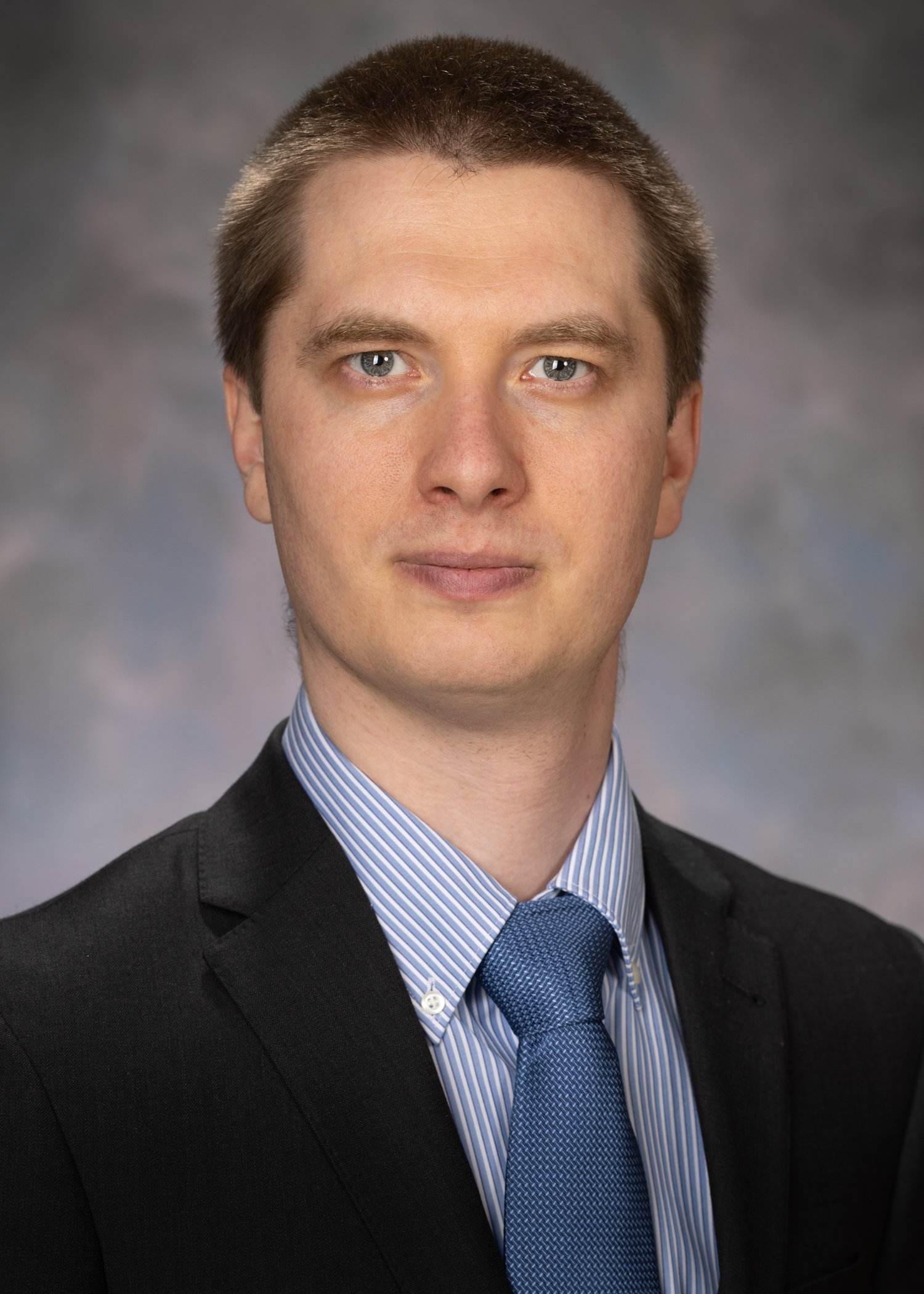
Read on to learn more about Dr. Artomov’s work and research career.
How/why did you decide to pursue a career in your field?
There is an element of spontaneity in the random sequence of events. Back in the day, bioinformatics and computational genomics were just emerging as a field — the first human genome was sequenced just 25 years ago. A lot of people who pioneered the field usually were trained in some of the neighboring life sciences areas such as physics, chemistry, computational science, computer science and math.
Originally, I started as a graduate student in chemistry with a general interest in how living organisms function. One day, I randomly ran into my future PhD advisor, one of the leaders in the computational genetics field, in a corridor, and that brief discussion has significantly changed my future career. In a few weeks, I joined his lab and started my path in human genetics. It was a decade-long journey to transition from computational chemistry into leading a computational genetics lab. Now, I am excited to work at Nationwide Children’s Hospital – the leading place in genetic testing and gene therapy development – something which was only theoretically discussed at the start of my career, and now, I can see all of this tremendous progress every day at my workplace.
What is your favorite part of your job?
I like coming to work and seeing the progress we are making and how people are generating ideas. My job is to guide the research team and ensure smooth integration between clinical and computational efforts within our lab, but at the same time, we function as one of the integral parts of the Institute for Genomic Medicine, a unique research and clinical infrastructure supporting patient care across many domains. The feeling of the work being accomplished and a meaningful contribution to the advancement of the field is something that motivates me to be here every day.
How does your research serve our patients and our community?
There are a few key questions that we are aiming to answer: why and when do people get sick? In part, the answer is in our DNA. Just recently, we released PGS Browser (https://pgs.nchigm.org) – a large atlas of genetic susceptibilities across nearly 1,000 traits, based on analysis of nearly 500,000 individuals and, among other things, time-of-onset personalized predictive models for nearly 20 common diseases to identify individuals at high risk.
We would also like to pinpoint where the previously undiscovered risk genes or mutations exist. For this, we compare the genetics of healthy individuals (control group) and patients diagnosed with a disease. Creating a shared group of controls that can be utilized by many studies at once is a major resource-saving solution because we can then direct research funding to sequencing the DNA of disease carriers rather than creating separate healthy control cohorts for every study.
Fun Facts About Dr. Artomov
What’s your favorite word, and why?
Family. It’s consistent, careers come and go, but family stays with you for your entire life.
What do you usually eat for breakfast?
I have two different schedules. If it’s a workday, then it usually would be an omelet or scrambled eggs. But if it’s a weekend, then I would make a special type of pancake — traditional thin-crusted pancakes with salmon and eggs.
What would be your dream job if you could do anything (that wasn’t working in research)?
I’d probably work in either architecture, building, construction or something like that. I like to see things built. The feeling of accomplishment, finalizing that work and seeing the result, is amazing.
Favorite band/genre/artist?
Usually, I prefer quiet, but if I turn on the radio, most of the radio stations in Columbus would do as they’re playing American classic rock, which is fine.
However, genetic data is highly protected, and its sharing is very strongly regulated. Therefore, any shared pool of controls must be fully secure to eliminate any ability to uncover individual-level data, yet keep the analysis still feasible. We have created a secure algorithm for analyzing genetic data in such comparison studies and built a control pool of 40,000 individuals that is publicly available. This allows for meaningful research of the data that has previously been highly restricted from any external analyses.
Finally, the result of such case-control genetic comparison is finding genetic evidence that helps to nominate drug targets for therapy development. Having such evidence for a particular drug target increases the likelihood of approval of the corresponding drug by 2-3 times. This is a massive mechanism to save resources while facilitating the advancement of therapy development.
About the author

Gina is a licensed physical therapist assistant with 30 years of direct patient care experience treating all ages in outpatient orthopedics and sports medicine rehabilitation, and post-acute home health care settings. Having a background as a competitive gymnast, and the injuries that accompany sport spurred her into a career in physical therapy and rehabilitation. She is also a certified mat Pilates instructor.
Gina began health content writing in 2021 focusing on informational writing such as blogs, web pages and articles for health care, health and wellness businesses and publications. She believes educating everyone about evidence-based health and wellness is essential to improving health awareness and quality of life.
- Gina Vitale, PTAhttps://pediatricsnationwide.org/author/gina-vitale-pta/

- Gina Vitale, PTAhttps://pediatricsnationwide.org/author/gina-vitale-pta/
- Gina Vitale, PTAhttps://pediatricsnationwide.org/author/gina-vitale-pta/
- Gina Vitale, PTAhttps://pediatricsnationwide.org/author/gina-vitale-pta/