
DNA Methylation-Based Diagnostics: Refining Diagnosis for the Most Complex Pediatric Brain Tumors
DNA Methylation-Based Diagnostics: Refining Diagnosis for the Most Complex Pediatric Brain Tumors https://pediatricsnationwide.org/wp-content/uploads/2022/09/InPractice_Brief_Multimodal-Molecular_Edit-1024x783.jpg 1024 783 Lauren Dembeck https://pediatricsnationwide.org/wp-content/uploads/2021/03/Dembeck_headshot.gif

Developed at Nationwide Children’s, the MACDADI classifier is compatible with next-generation methylation arrays and quickly delivers more accurate tumor diagnoses, offering a clinically validated alternative to outdated and unregulated methylation classifiers.
Diagnosing central nervous system (CNS) tumors in children is among the most challenging problems in pediatric oncology. Many tumor types share overlapping microscopic features, and genetic testing alone cannot always determine their precise subtype. Yet accurate classification is critical because treatment protocols and prognoses can differ dramatically depending on the molecular identity of a tumor.
“Two children can present with tumors that look nearly identical under the microscope but behave differently in response to therapy,” explains Ke Qin, PhD, bioinformatics scientist in the Steve and Cindy Rasmussen Institute for Genomic Medicine (IGM) at Nationwide Children’s Hospital. “Relying solely on morphology and genetic markers may not be enough. That’s where DNA methylation profiling can make a difference.”
DNA methylation is a chemical modification that helps regulate which genes are turned on or off and can create a distinctive epigenetic “fingerprint” for each tumor type. By analyzing methylation patterns across hundreds of thousands of sites in the genome, scientists can identify subtle biological differences that distinguish even closely related cancers. Over the past decade, methylation-based classifiers have become integral to CNS tumor diagnostics and are increasingly shaping precision medicine efforts.
A Need for a New Classifier
The most widely adopted classifier, developed by scientists at the German Cancer Research Center or Deutsches Krebsforschungszentrum (DKFZ), demonstrated that machine-learning analysis of methylation data could reclassify up to 12% of tumors previously misdiagnosed by standard pathology. To use it, hospitals needed to upload patient data to an external server overseas, raising privacy and regulatory concerns, and the algorithm was trained on older Illumina methylation arrays that are now being phased out.
When Illumina released its latest methylation arrays, the MethylationEPIC v2 BeadChip, most existing classifiers, including DKFZ’s, were no longer compatible. That limitation, combined with the need for faster turn- around and full control over data handling, prompted Dr. Qin and colleagues to build a new solution in-house.
“We wanted something we could run locally, validate clinically and adapt as technology evolves,”says Dr. Qin. “Sending patient data abroad and waiting a full day for results is often not practical. We needed a classifier that could meet clinical standards and process the newest array data.”
Building a Better, Faster Classifier
Dr. Qin, a senior bioinformatician with 10 years of experience, began development of the Methylation Array Classification Diagnostic and Data Integration (MACDADI) platform in 2022. With help from IGM and the Nationwide Children’s Information Services department, the new classifier combines machine learning, cloud computing and automated reporting to streamline CNS tumor classification from start to finish. MACDADI was trained on nearly 4,000 publicly available cases spanning 167 CNS tumor subtypes across 22 data repositories. By selecting CpG sites shared across all Illumina platforms (450K, EPIC v1 and EPIC v2), the team ensured that the model remains compatible with past and current chips.
Instead of the random-forest algorithm used by DKFZ, MACDADI employs a regularized generalized linear model (RGLM), a classic but highly efficient approach well suited to imbalanced datasets in which some tumor types are extremely rare. This method eliminates the need to down-sample common subtypes, preserving statistical power and improving reproducibility.
The training process that took more than 24 hours with the DKFZ model took about three hours for MACDADI Model 1, with zero cross-validation errors reported internally, and 15 minutes for Model 2. Results are reproducible with fixed random seeds, an important feature for regulatory compliance, contributing to MACDADI’s clinical-grade engineering.
Once a run is initiated, an automated AWS pipeline detects new cases and processes the entire workflow. The data upload, model execution and report generation takes less than an hour for a batch of eight samples. For a single case, results are available in under 10 minutes.
MACDADI was developed within the research group led by Elaine R. Mardis, PhD, co-executive director of the IGM at Nationwide Children’s Hospital and holder of the Nationwide Foundation Endowed Chair in Genomic Medicine. Dr. Mardis’s group has a long history of pioneering advances in cancer genomics; it was among the first to apply next-generation sequencing to compare tumor DNA with matched normal tissue to identify the mutations driving cancer growth. This environment of innovation and deep technical expertise provided the foundation for Dr. Qin’s work in building this clinically sustainable methylation-based classifier.
“An important component of MACDADI’s clinical impact is its role within the Molecular Characterization Initiative (MCI), a large-scale study I lead as principal investigator. The MCI has now profiled more than 6,600 pediatric and AYA cancer patients across the U.S., Canada, Australia and New Zealand through Children’s Oncology Group-affiliated institutions, and MACDADI has been used to provide clinical diagnostic information for most of the MCI CNS cases,” says Dr. Mardis.
The MCI is executed entirely at Nationwide Children’s Hospital, where tumor and matched normal specimens from patients are processed at the Biopathology Center and transferred to the IGM’s clinical laboratory for comprehensive molecular profiling, including methylation array data analysis supported by the MACDADI classifier. The project is funded by a contract with the National Cancer Institute.
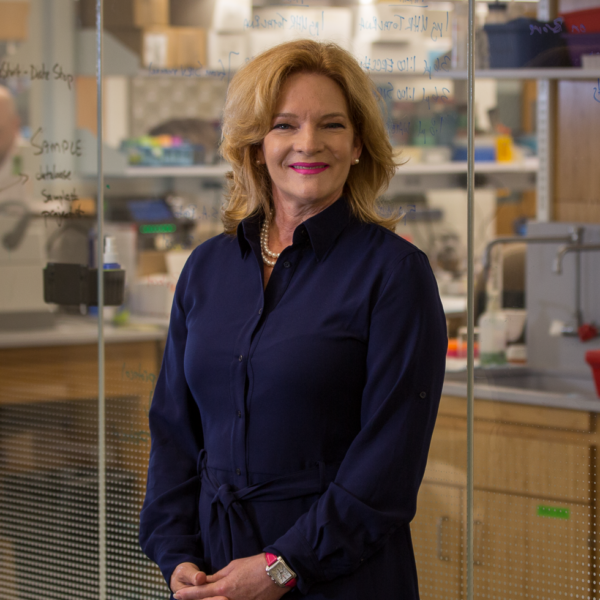
Without MACDADI, continuation of high-throughput methylation array testing at this scale would not have been feasible.”
– Elaine R. Mardis, PhD, co-executive director of the Institute for Genomic Medicine at Nationwide Children’s Hospital and holder of the Nationwide Foundation Endowed Chair in Genomic Medicine
Generating Actionable Clinical Reports
Each clinical MACDADI report provides a multi-level tumor classification (superfamily, family, class and subclass) along with confidence scores, interactive t-SNE visualizations (2-D maps showing how cases cluster by tumor type) and genome-wide copy-number variation plots. MACDADI generates confidence scores for each classification level, providing clinicians with a transparent measure of how strongly a case matches a given tumor classification. This allows providers to integrate methylation insights with histologic and molecular findings.
In clinical validation using 230 CNS cases profiled on the Illumina EPIC v2 array, MACDADI outperformed the DKFZ classifier on accuracy and confidence scoring. To demonstrate clinical utility, in routine use at Nationwide Children’s, methylation profiling with MACDADI refined the diagnosis in one-third of patients and changed the diagnosis entirely in 5%. “Even a small improvement in diagnostic precision can have life-changing implications for a child’s therapy,” notes Dr. Qin. “MACDADI helps us reach those answers faster, with higher confidence and fully within our regulatory environment.”
Meeting the Demand for Licensable Solutions
Interest in the platform has quickly expanded beyond Nationwide Children’s. Several major medical centers, including leading U.S. academic hospitals, are now exploring partnerships to implement MACDADI within their own programs. Negotiations are at various stages through the hospital’s Office of Technology Commercialization (OTC).
“Institutions across the country found themselves in the same position, needing a clinically validated methylation classifier once the old systems became unusable,” said Andrew Corris, PharmD, JD, senior licensing associate in the OTC. “Nationwide Children’s classifier meets that need and offers a validated workflow that’s ready for real-world deployment.”
Dr. Corris explained that many competing algorithms remain constrained by regional datasets or uncertain regulatory status. By contrast, MACDADI’s high- throughput genomics infrastructure and integration with cloud-based automation make it a strong candidate for multi-institutional licensing.
What differentiates Nationwide Children’s methylation classifier is that it’s not just another research tool—it has demonstrated clinical utility and delivers the speed, reproducibility, and security that hospital laboratories need.”
– Andrew Corris, PharmD, JD, senior licensing associate in the Office of Technology Commercialization at Nationwide Children’s Hospital.
Powering Precision Medicine Through Partnership
The OTC plays a central role in bridging laboratory innovation and clinical translation at Nationwide Children’s. For Dr. Qin’s team, collaborating with the OTC provided essential support in transforming MACDADI from a research concept into a regulated, sharable diagnostic tool. “This was my first experience working with the technology commercialization office,” Dr. Qin said. “We discussed data sharing, licensing and the technical aspects that would make it possible for other hospitals to adopt the platform.”
As methylation profiling continues to expand beyond CNS tumors into sarcomas and other solid tumors, Dr. Qin’s team is already adapting the MACDADI frame- work for additional disease areas. They have developed a research-only sarcoma classifier using the same architecture, with plans for clinical validation underway.
Looking Ahead
Beyond its performance, MACDADI is strengthened by the depth and diversity of the data behind it. As Dr. Corris explains, the team leveraged thousands of cases with methylation data collected over many years and from institutions around the world to build what is essentially a universal reference database for CNS tumors.
“We’ve accumulated methylation profiles from thousands of children globally, giving us a resource that captures even the rarest tumor subtypes,” said Dr. Corris. “As new data come in, the model will continue to evolve, allowing it to support diagnosis in cases that are often the hardest to classify.”
Our goal is to continue improving the classifier and expanding its coverage to rare tumor types. Every incremental gain in accuracy means another child gets an improved diagnosis and the best possible treatment plan.”
– Ke Qin, PhD, bioinformatics scientist in the Institute for Genomic Medicine at Nationwide Children’s Hospital
Image Credit: Adobe Stock (Header) & Nationwide Children’s (Portrait)
About the author
Lauren Dembeck, PhD, is a freelance science and medical writer based in New York City. She completed her BS in biology and BA in foreign languages at West Virginia University. Dr. Dembeck studied the genetic basis of natural variation in complex traits for her doctorate in genetics at North Carolina State University. She then conducted postdoctoral research on the formation and regulation of neuronal circuits at the Okinawa Institute of Science and Technology in Japan.
- Lauren Dembeckhttps://pediatricsnationwide.org/author/lauren-dembeck/

- Lauren Dembeckhttps://pediatricsnationwide.org/author/lauren-dembeck/
- Lauren Dembeckhttps://pediatricsnationwide.org/author/lauren-dembeck/
- Lauren Dembeckhttps://pediatricsnationwide.org/author/lauren-dembeck/