
Renal Artery Stenosis Perspectives: A Conversation With Nephrologist Mahmoud Kallash, MD
Renal Artery Stenosis Perspectives: A Conversation With Nephrologist Mahmoud Kallash, MD https://pediatricsnationwide.org/wp-content/uploads/2026/09/110822BT056Kallash-1024x683.jpg 1024 683 Gina Vitale, PTA https://pediatricsnationwide.org/wp-content/uploads/2025/04/IMG_1961-cropped-Gina-profile.jpg

Mahmoud Kallash, MD, is a glomerular disease expert, the director of the Comprehensive Hypertension Program at Nationwide Children’s Hospital, a principal investigator and an associate professor in pediatrics at The Ohio State University College of Medicine. Here, Dr. Kallash discusses current treatment obstacles, ongoing collaborative research, and emerging strategies advancing renovascular care in pediatric populations.
What is renal artery stenosis?
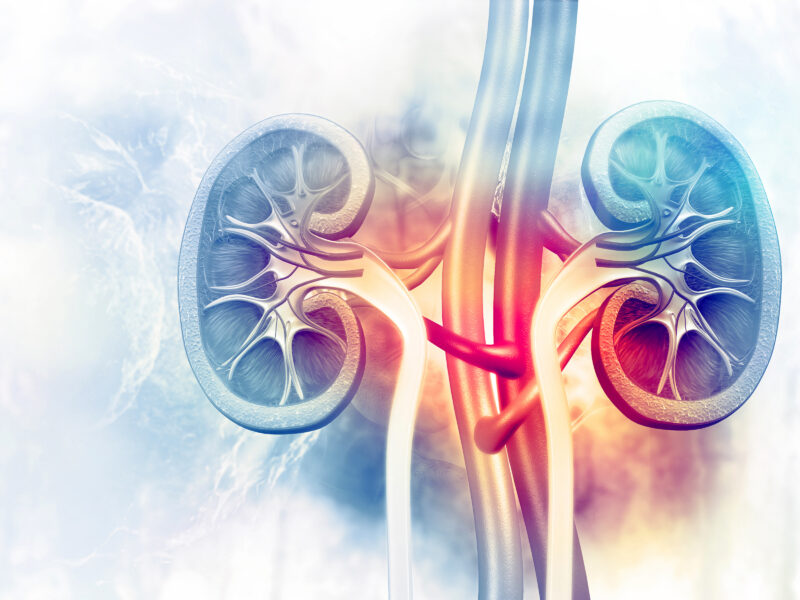
In its simplest terms, renal artery stenosis is narrowing of the arteries that supply blood flow to the kidneys. When part of the renal artery, either the main vessel or a bifurcation, narrows, it results in decreased perfusion to that area of the kidney, resulting in hormonal cascade that causing significant hypertension and can cause chronic renal tissue damage. The degrees of renal artery stenosis vary significantly between people and sometimes we see it on bothsides. When the stenosis is not bad, possibly less than 50% narrowing, those patients may not have significant injury to that kidney or severe hypertension. However, if it’s significant stenosis, then you start to see evidence of severe hypertensio and those patients will present: at early age with severe hypertension and often resistant to medication. In more advanced but less usual cases, there’ is decreased kidney function.
In children, RAS is often induced by fibromuscular dysplasia, which has a genetic background — not a specific genetic disease, but a genetic tendency. Meaning there is some maldevelopment of the vascular muscles and endothelium. It presents as multiple areas of narrowing along the vessel, like a string of beads, sometimes associated with aneurysm in the vessel. It occurs early in life and and tends to be more common in females and Caucasians. Other conditions associated with renal artery stenosis are neurofibromatosis type 1 (NF1), Williams syndrome, among other genetic diseases. Thus, once we diagnose renal artery stenosis we usually send genetic testing to screen for a possible genetic cause. .
What are the challenges of treating RAS within pediatric populations?
Age and size of the child are often the most significant challenges. For example, when patients are young and small, blood vessels can be small thatw e are unable to see if there is a stenosis. I’ve had patients who presented with hypertension at two to three years of age, their imaging would be negative because the stenosis would be too small to be visible, but when we repeat the imaging in few years, then it’s visible.
The degree of stenosis and the catheter size can also create a treatment challenge. Sometimes we can see stenosis, but it’s way too deep in the kidney, or the blood vessels are too small, so our interventional radiologist cannot place a stent to treat it. We typically do not stent them until the child grows and their vessels widen. Infrequently, in severe cases or due to surgical and technical difficulty s, nephrectomy with or without autoretransplantation may be necessary. In a kidney autoretransplnat, if the renal artery gets shorter, the kidney cannot remain in the same place, so our surgical colleagues would move it into the pelvis , and reconnect the vascular system. This has been very effective in controlling their hypertension.
Finally, blood pressure medications are needed to control their hypertension but adherence to medications can be an issue, especially in adolescents.
What research and clinical work addressing RAS is happening at Nationwide Children’s?
We’ve started building a cohort of RAS patients to collect clinical data, samples and even genetic testing results. We are working on a publication, and looking at patient outcomes at one year, three years and five years.
What is your perspective on the future management of renal artery stenosis?
From a research standpoint, we’ll continue analyzing the data and collaborating with other sites to strengthen the data. We aim to identify which genes are associated and if there’s a correlation with other conditions, such as vascular malformation or other markers, to effectively evaluate those patients.
From a clinical aspect, we are refining our treatment protocols. and improving the hypertension control in such patients based on their degree, location of the stenosis and their genetic testing result. And, of course, we’re aiming for national collaboration with nephrologists and other disciplines, because that’s how science and medicine progress.
About the author

Gina is a licensed physical therapist assistant with 30 years of direct patient care experience treating all ages in outpatient orthopedics and sports medicine rehabilitation, and post-acute home health care settings. Having a background as a competitive gymnast, and the injuries that accompany sport spurred her into a career in physical therapy and rehabilitation. She is also a certified mat Pilates instructor.
Gina began health content writing in 2021 focusing on informational writing such as blogs, web pages and articles for health care, health and wellness businesses and publications. She believes educating everyone about evidence-based health and wellness is essential to improving health awareness and quality of life.
- Gina Vitale, PTAhttps://pediatricsnationwide.org/author/gina-vitale-pta/

- Gina Vitale, PTAhttps://pediatricsnationwide.org/author/gina-vitale-pta/
- Gina Vitale, PTAhttps://pediatricsnationwide.org/author/gina-vitale-pta/
- Gina Vitale, PTAhttps://pediatricsnationwide.org/author/gina-vitale-pta/