
Featured Researcher – Sriram Vaidyanathan, PhD
Featured Researcher – Sriram Vaidyanathan, PhD https://pediatricsnationwide.org/wp-content/themes/corpus/images/empty/thumbnail.jpg 150 150 Gina Vitale, PTA https://pediatricsnationwide.org/wp-content/uploads/2025/04/IMG_1961-cropped-Gina-profile.jpg
Sriram Vaidyanathan, PhD, is a principal investigator in the Jerry R. Mendell Center for Gene Therapy at the Abigail Wexner Research Institute at Nationwide Children’s Hospital and an assistant professor of Pediatrics at The Ohio State University College of Medicine.
Dr. Vaidyanathan’s path pivoted during his education, as it does for many researchers. His biomedical engineering journey eventually led to research and development of cutting-edge gene and cell therapies to provide more efficient treatments for pediatric patients living with chronic diseases. His innovative work and ideas are changing how healthcare providers treat conditions such as cystic fibrosis (CF). Continue reading to learn more about Dr. Vaidyanathan’s educational and professional journeys.
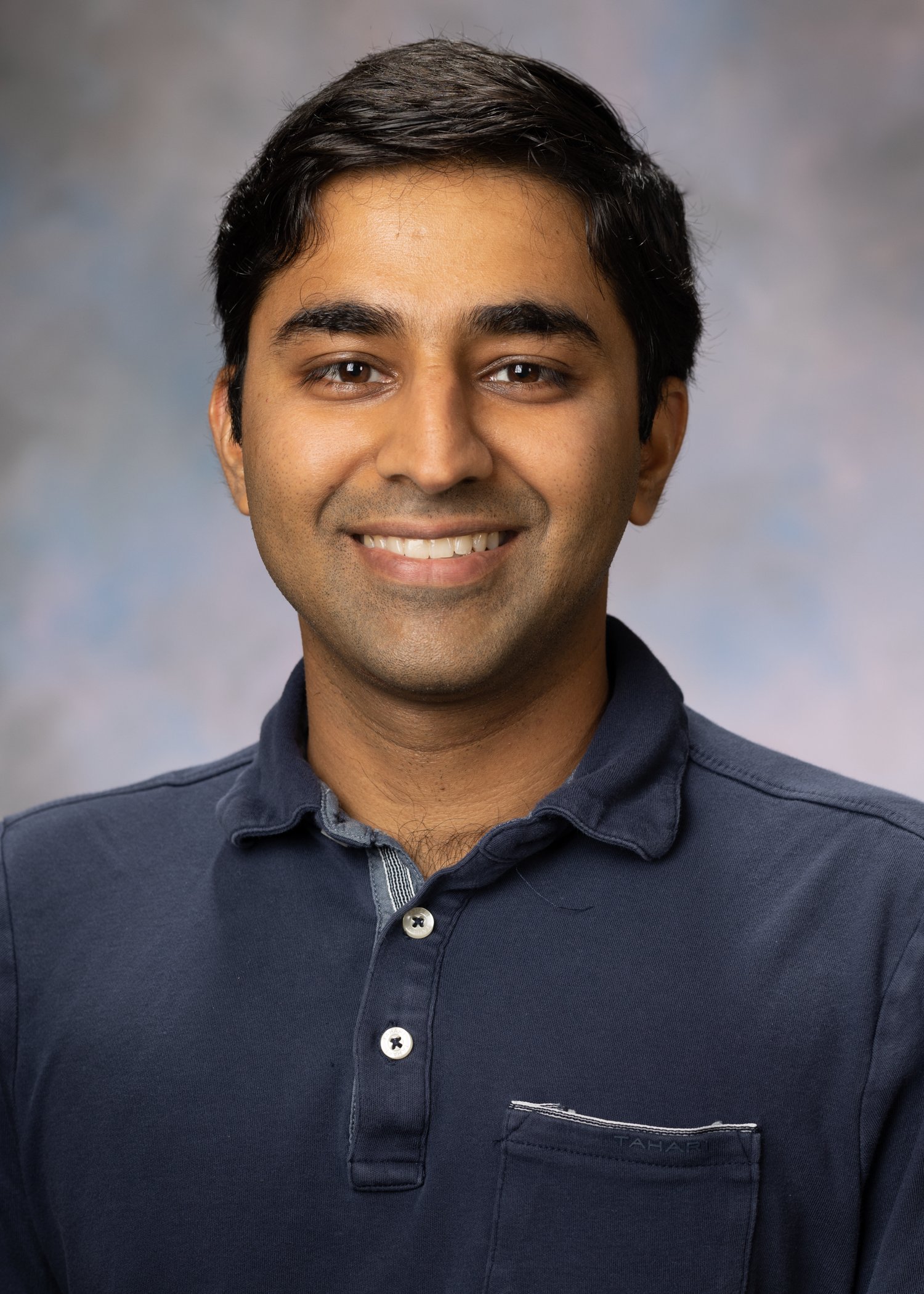
Read on to learn more about Dr. Vaidyanathan’s work and research career.
How/why did you decide to pursue a career in your field?
My interest in gene therapy started when I was finishing up undergraduate studies at Purdue University. At that time, while pursuing my bachelor’s degree in biomedical engineering, I worked in a neural engineering lab. I became intrigued during a molecular biology class, where we were talking about missing genes, and I thought, we should be able to express them, which led me to think about gene therapy.
My focus shifted while studying polymer-based gene delivery during the five years I worked toward my PhD at the University of Michigan. Then, I studied at Stanford University for my postdoctoral degree, where I became interested in genome editing, which was new. With conventional gene therapy, you don’t get the natural expression; instead, you’re replacing something missing — it’s sort of a sledgehammer approach. Whereas with genome editing, in theory, it is more durable than conventional gene therapies, since there’s the possibility of restoring exactly what is, or close to what is natural. The advantage that genome editing provides is that it can precisely correct changes at the genetic level, and it should help you maintain the native expression of genes. During my six years at Stanford, I began working with cystic fibrosis because it’s one of those disorders where just one broken gene causes the entire disease. CF is a relatively common disorder in the United States, and we’re trying to fix it.
What was your path to your current role?
When I was finishing my postdoctoral degree, I received an award from the National Institutes of Health to research cystic fibrosis gene therapy. I began investigating research centers, and I liked Nationwide Children’s due to its recent success in gene therapy. They have a strong infrastructure for genetic therapies, such as access to cells, as well as a collaborative and professional community engaged in cystic fibrosis research in the gene therapy department. So, the confluence of the two attracted me. I enjoyed interacting with everyone during my visit; they were considerate and thoughtful, and it seemed promising for the future.
How does your research serve our patients and our community?
We’re working on durable therapies to treat cystic fibrosis. So right now, if you look at the landscape of treating cystic fibrosis, there is a very effective drug that can help about 80-90% of people with CF, but it’s a drug that must be taken daily. And then there are about 10-20% of people in the United States who can’t take the drug. Either the drug doesn’t work on them or they’re not able to tolerate the drug. There’s a defined need for a new, more durable therapy.
Our idea is to create a one-time therapy based on genome editing that fixes the stem cells of the airways. CF is a disease that affects many organs, but many people die because of infections in their lungs. Therefore, we are starting with the 10-20% population who do not have treatment options and durably replacing the entire gene in their airway stem cells. If we apply that therapy once, it should then help them for the rest of their lives.
Then, if we’re successful, we’d apply that therapy to the other 80-90% of people who are taking a pill every day. So, everybody has the potential to benefit from the therapy, even though there’s a smaller population that is really in need of it right now.
Fun Facts About Dr. Vaidyanathan
What’s your favorite word, and why?
Possible. I have a phrase: Everything is possible. We haven’t figured out how yet, but we can or will do it. I like an optimistic take on things.
What do you usually eat for breakfast?
Cereal and fruit.
What would be your dream job if you could do anything (that wasn’t working in research)?
This job was the only thing I wanted to do. Most other things would have been a backup. Even though I started in engineering, I would still have focused on research, such as developing a device.
Favorite band/genre/artist?
Indian classical music is my favorite genre.
Favorite way to relax?
Listening to or playing Indian classical music. I learned to play it when I was a child.
What is your favorite part of your job?
I love working on innovative ideas and having the freedom to pursue them. That’s what drew me to science and academic research. I also love collaborating and coming up with new ideas, whether it’s with my own team or people across other faculty and their teams. It’s a rewarding experience when you’re able to come up with new ideas, and then when you’re stuck and having a conversation with somebody, and they help you complete that puzzle. Finally, my favorite part is the potential to make a difference. It’s not a difference that you might see right away — it’s long-term, and everybody is solving a small piece of the puzzle by generating ideas and making discoveries that may be helpful elsewhere. I love working with everybody in my lab, training and teaching people.
About the author
Gina is a licensed physical therapist assistant with 30 years of direct patient care experience treating all ages in outpatient orthopedics and sports medicine rehabilitation, and post-acute home health care settings. Having a background as a competitive gymnast, and the injuries that accompany sport spurred her into a career in physical therapy and rehabilitation. She is also a certified mat Pilates instructor.
Gina began health content writing in 2021 focusing on informational writing such as blogs, web pages and articles for health care, health and wellness businesses and publications. She believes educating everyone about evidence-based health and wellness is essential to improving health awareness and quality of life.
- Gina Vitale, PTAhttps://pediatricsnationwide.org/author/gina-vitale-pta/

- Gina Vitale, PTAhttps://pediatricsnationwide.org/author/gina-vitale-pta/
- Gina Vitale, PTAhttps://pediatricsnationwide.org/author/gina-vitale-pta/
- Gina Vitale, PTAhttps://pediatricsnationwide.org/author/gina-vitale-pta/