
Norms, Needs and New Frontiers in Pediatric Mental Health
Norms, Needs and New Frontiers in Pediatric Mental Health https://pediatricsnationwide.org/wp-content/uploads/2026/02/Original_hi_res_JPG-051424BT24-1024x683.jpg 1024 683 Madison Storm https://pediatricsnationwide.org/wp-content/uploads/2023/09/092023BT159.png
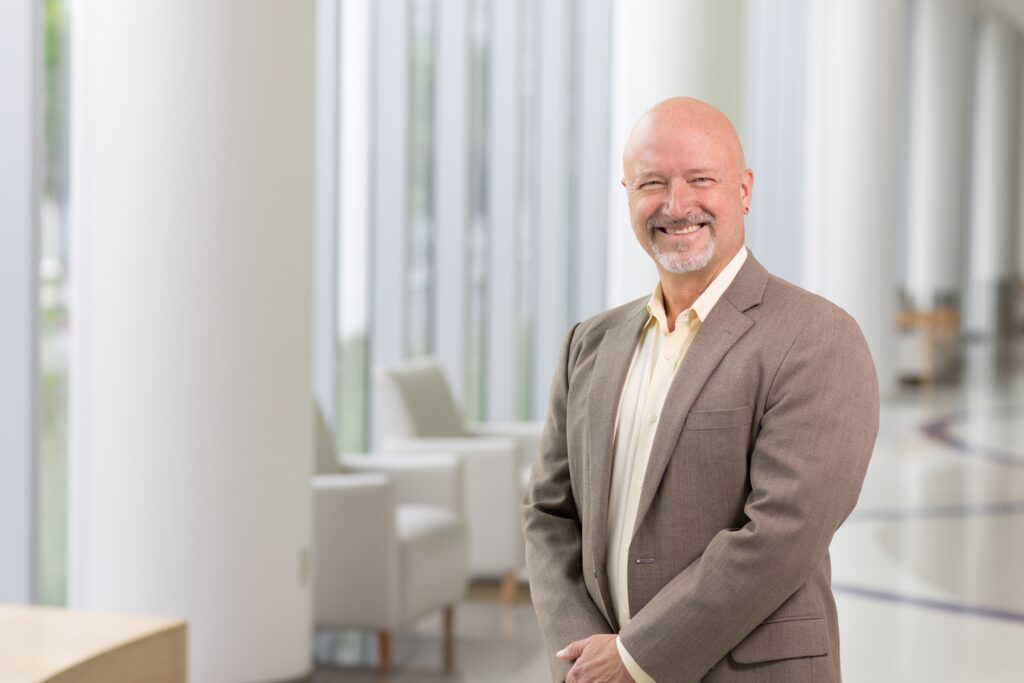
An interview with Eric Youngstrom, PhD, director of the Institute for Mental and Behavioral Health Research at the Abigail Wexner Research Institute at Nationwide Children’s Hospital.
At Nationwide Children’s Hospital, the Institute for Mental and Behavioral Health Research (IMBHR) is driving discovery through improved assessments, effective treatments and digging deep to answer the ‘why’ behind clinical challenges. Specializing in areas such as mood disorders, autism, sleep, substance misuse and self-injurious thoughts and behavior, this team is dedicated to advancing the best care in an ever-evolving specialty.
What are opportunities for technology commercialization to drive better outcomes for mental health?
The real opportunity in technology commercialization is not simply launching a single app or assessment tool—it’s building an ecosystem that brings discovery science, data analytics and clinical workflow into alignment. Commercial partnerships allow academic innovations to evolve into interoperable, sustainable solutions that can be used across many types of care settings. For pediatric mental health, this means moving beyond small pilot studies toward products that can learn from clinical data, integrate with telehealth and school-based services and reach families wherever they already receive support. When developed thoughtfully, commercialization accelerates the path from research insight to measurable improvements in youth mental health outcomes.
What is included in IMBHR’s first strategic plan, and how will it shape future research?
The strategic plan prioritizes research areas based on unmet needs and opportunities for impact. It identifies high-need conditions—such as attention problems, aggression, anxiety and sleep disturbances—that interfere with learning and development. The plan also highlights where families are asking for help and where funders are investing. It’s a roadmap for where to grow the team and focus resources; it’s interdisciplinary, bridging service lines across the hospital and connecting research to clinical care.
What does improved assessment look like at Nationwide Children’s, and which IMBHR innovations excite you most?
We’ve built a comprehensive map of assessments currently available to clinicians and identified tools that need upgrading. A lot of the assessment tools we’re using are excellent choices with great research behind them, but they lack normative data; no one has invested in figuring out what’s typical for a child or teenager in the U.S. today. No one knows the answer to the first question parents have when they visit the clinic: is this normal? We’re investing in building those norms, which will allow us to give families clearer, more meaningful feedback. For example, instead of asking if a teen feels perfect, we can now say “Here’s what an average amount of worry looks like.” That’s powerful. It helps normalize experiences and guide care more effectively.
Personally, I’m excited about the work we’re doing in mood disorders, an area I’ve focused on throughout my career, but the broader investment across conditions is what makes this initiative so impactful.
What challenges do you foresee in translating research-based tools into scalable, commercially viable products for clinical use?
A key challenge lies in moving from rigorously tested research instruments to tools that function smoothly in the complex realities of clinical practice. Products must retain their scientific validity while accommodating diverse patient populations, languages, workflows and resource levels. Regulatory requirements, data privacy considerations and the need for compatibility with electronic health record systems add further hurdles. In addition, commercialization requires sustained investment, technical infrastructure and business planning—elements that extend beyond traditional academic environments. Balancing scientific precision with usability and feasibility is essential to successful translation.
How is IMBHR working with the Office of Technology Commercialization (OTC) to translate its assessment innovations into tools that can be widely adopted in clinical settings?
IMBHR works closely with the OTC to identify innovations with clear potential for real-world impact, such as digital versions of validated assessment scales, predictive algorithms and tools that support measurement-based care. Once an innovation is ready for broader dissemination, the partnership helps secure intellectual property, evaluate market needs and connect investigators with industry, software and implementation partners. This collaboration ensures that IMBHR’s research is not confined to publications but is transformed into practical, scalable tools that clinicians and families can use directly to promote children’s mental health and well-being.
How do you envision the future of mental and behavioral health assessments evolving in clinical practice? I think the future lies in shifting our focus from process to outcomes. I recently read a book on AI that made a point of changing our thinking around outcomes, and it directly applies to the work we’re doing. It’s not about increasing the number of visits or diagnoses, it’s about improving health, providing solutions that help patients feel better and live healthier lives. Families don’t want more time in clinics; they want solutions. The goal should be less despair and more resilience, more light instead of looking at what’s dark. That means rethinking what success looks like—not just eliminating symptoms, but helping kids thrive. I think we’ll see these [our processes] evolve to support resilience, emotional wellbeing and developmental growth. IMBHR is embracing this vision by redefining the finish line: not just treating illness but promoting wellness. It’s a radical but necessary shift, and it’s one I believe will transform how we care for children and families.
How do you envision the future of mental and behavioral health assessments evolving in clinical practice?
I think the future lies in shifting our focus from process to outcomes. I recently read a book on AI that made a point of changing our thinking around outcomes, and it directly applies to the work we’re doing. It’s not about increasing the number of visits or diagnoses, it’s about improving health, providing solutions that help patients feel better and live healthier lives. Families don’t want more time in clinics; they want solutions. The goal should be less despair and more resilience, more light instead of looking at what’s dark. That means rethinking what success looks like—not just eliminating symptoms, but helping kids thrive. I think we’ll see these [our processes] evolve to support resilience, emotional wellbeing and developmental growth. IMBHR is embracing this vision by redefining the finish line: not just treating illness but promoting wellness. It’s a radical but necessary shift, and it’s one I believe will transform how we care for children and families.
How do you anticipate the commercialization of these tools will impact accessibility and equity in pediatric mental health care?
When guided by a commitment to equity, commercialization has the potential to greatly expand access to high-quality mental health assessment. Families live in a rapidly shifting technological landscape, and commercialization makes it possible for the tools to adapt and evolve to stay relevant. Embedding validated screeners and risk tools into digital platforms allows them to be used not only in specialty mental health clinics, but also in primary care, schools and community organizations. The goal is to create tools that travel with families—not the other way around—so that early identification and support are available regardless of geography, socioeconomic status or clinic resources. Thoughtful commercialization can help ensure that every child has access to timely, appropriate mental health care, closing gaps rather than widening them.
Image Credit: Nationwide Children’s
About the author

Madison Storm is the Senior Strategist of Research Communications at Nationwide Children's Hospital. She earned her bachelor's in multimedia journalism from Virginia Tech in 2021 and went on to achieve her master's in health communication from Johns Hopkins University in 2023. Her passion for transforming the complex to clear is supported by various experiences writing for consumer audiences.
- Madison Stormhttps://pediatricsnationwide.org/author/madison-storm/

- Madison Stormhttps://pediatricsnationwide.org/author/madison-storm/
- Madison Stormhttps://pediatricsnationwide.org/author/madison-storm/

- Madison Stormhttps://pediatricsnationwide.org/author/madison-storm/