
Featured Expert: Anna J. Kerlek, MD
Featured Expert: Anna J. Kerlek, MD https://pediatricsnationwide.org/wp-content/themes/corpus/images/empty/thumbnail.jpg 150 150 Gina Vitale, PTA https://pediatricsnationwide.org/wp-content/uploads/2025/04/IMG_1961-cropped-Gina-profile.jpg
Anna J. Kerlek, MD, is a physician specializing in child and adolescent psychiatry at Nationwide Children’s Hospital and is an Associate Professor at The Ohio State University College of Medicine. The Division of Behavioral Health at Nationwide Children’s is the largest of its kind at a pediatric institution in the United States, and The Ohio State University houses one of the oldest Child and Adolescent divisions in the country.
Dr. Kerlek is the Child and Adolescent Psychiatry Fellowship Training Director. She and Associate Program Director, Kristina Jiner, MD, oversee psychiatric fellows through a two-year program, as well as residents, medical students and other trainees. Her initiatives at Nationwide Children’s helped develop new programs, policies and procedures utilized in its mental and behavioral health units.
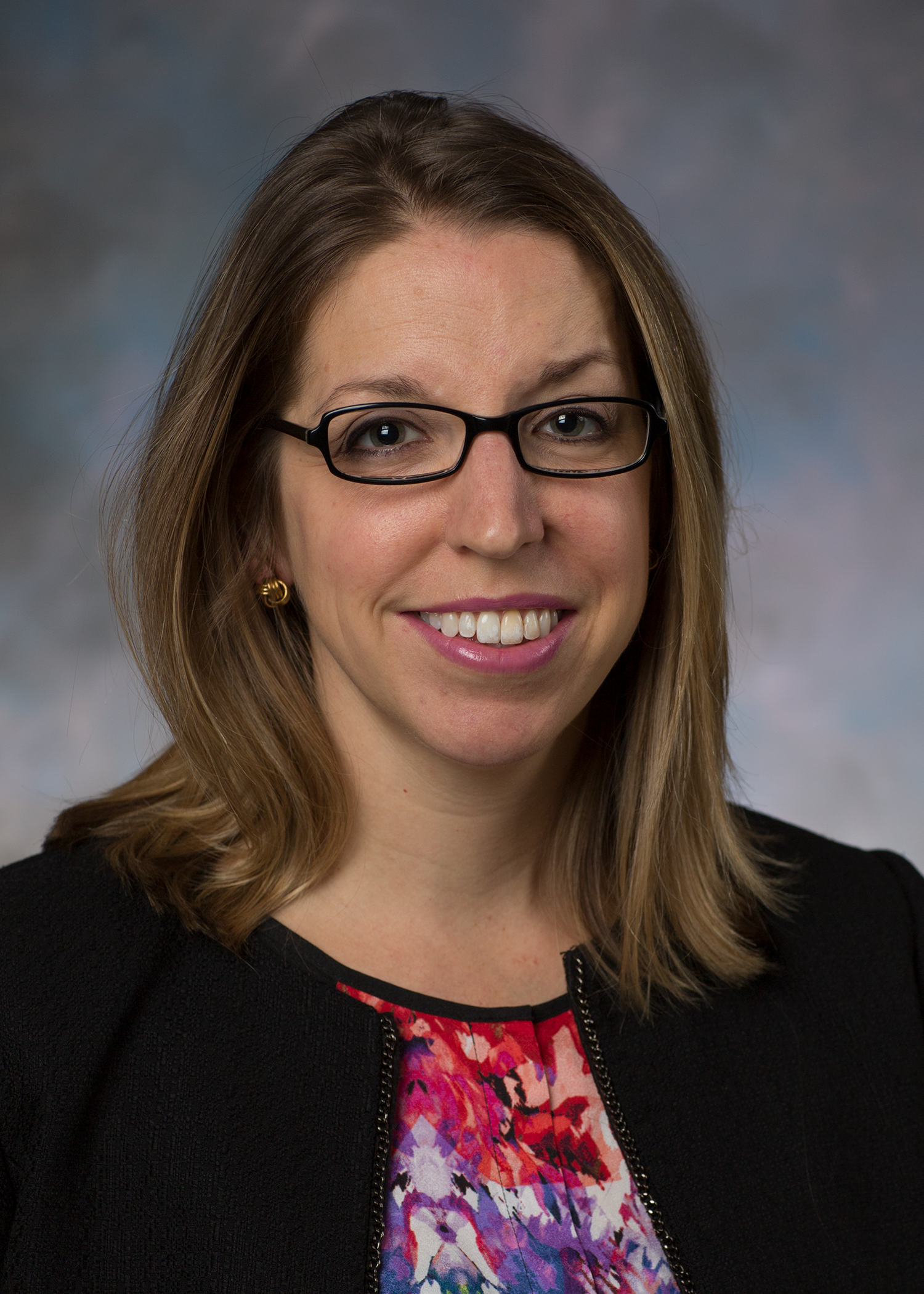
While simultaneously educating the next generation of mental health professionals, Dr. Kerlek serves as the medical director of the adolescent psychiatric unit and sees patients daily. She treats and educates hospitalized adolescents with severe and persistent mental illness such as bipolar disorder and schizophrenia, alongside their families or caregivers.
Dr. Kerlek is the co-chair of the American Academy of Child and Adolescent Psychiatry (AACAP) Inpatient, Residential, and Partial Hospitalization Committee, a group that encourages the least restrictive setting necessary for children and adolescent treatment while also recognizing the importance of these higher levels of care. She is also one of the initial creators of Psychiatry Grand Rounds at Nationwide Children’s Hospital.
Keep reading to learn more about this innovative and compassionate mental and behavioral health expert.
Why did you want to become a doctor?
I do not have anyone in my family who is in any form of medicine at all. I honestly went to medical school because I was good at test-taking, math and science, and it seemed like a good path to take. I did a month-long observership in high school with a consultation-liaison psychiatrist, and that sparked my initial interest in psychiatry. Interestingly, I began my journey in vocal performance in college. I’m a piano player and vocalist who then transitioned to a dual major in psychology and biology.
What made you decide to specialize in psychiatry? And your pediatric specialty?
I fell in love with psychiatry, in particular, early on in medical school. It’s enjoyable for me as someone who connects with other humans. I also think I excelled at providing support to patients, and that it was not just about the medication. I enjoy the education aspect in child and adolescent psychiatry. Although general psychiatrists certainly do that day in and day out, I think we have an added layer of needing to do that because you’re teaching not just the youth, but the caregiver. You must have everyone agree to the treatment plan and provide the recommendations and education in a manner that they can understand, making it digestible.
What do you think is the most important issue for you and your colleagues in caring for children with mental and behavioral health conditions, and how do you think we should be addressing it?
I treat kids with severe mental illness, but I’m going to speak about all kids and their caregivers. There’s a book that I recommend that most caregivers read. It’s called The Anxious Generation by Jonathan Haidt. It highlights the lack of connections that we have. So much of what we do every day is not necessarily in-person and lacks the support systems that we need to feel like people care and support each other.
With the rise of asynchronous communication, such as texting and messaging, and a lack of human connection that started before the pandemic, in the 2010s, I think we’re seeing a manifestation of that in our youth, and that they feel isolated. As child psychiatrists, and many of us have children of our own, we recognize the importance of having healthy families, and we can address it by reconnecting in person or in other ways that aren’t just texting or messaging. For example, having dinner together can help with routine, as well as knowing that it’s expected for you to talk with someone while you have a meal. Encourage more talking and social connectivity and less being on phones. There are a lot of things that technology has helped us with, such as testing for genetic disorders to help with diagnosing mental and behavioral health conditions. However, in other ways, it has also hindered our society.
How do you engage with research in psychiatry?
I have my hand in a few different areas of psychiatry.
One is looking into recruitment into psychiatry. We want to know if there are biases, gender or otherwise. Additionally, we want to understand how the process influences recruitment. We use a national matching system in psychiatry and across all medical fields. There are newer ways that we’re doing this, called signaling and geographic preference. Are there ways for medical students to understand the system better that will help them match into the right field? It isn’t very common nationally in medical schools to learn about child psychiatry. We were one of the first to write about that, and it was just published in Medical Science Educator about the medical student selective we started.
The second area is my clinical work in inpatient acute settings. We developed an inpatient Guidebook in 2021, published in the medical literature this year, which is now part of our day-to-day care, and there aren’t many units across the country that have anything like it. My psychology colleagues created and implemented this on our inpatient units here at Nationwide Children’s Hospital.
Finally, I have an interest in sexual health and contraception care. Generally speaking, psychiatric patients are at a much higher risk for unintended pregnancies across the board, not necessarily teenagers. There isn’t much published about it, but we do know that teenagers who unintentionally become pregnant, although there can be some very positive outcomes, often have more challenges, both with their own physical health as well as for the infant.
We’ve been able to provide education and care for youth assigned female at birth who are interested in learning more about contraception and can then provide appropriate prescriptions, whether that’s oral birth control, implantation of birth control, multiple methods, and we can do almost all of them here on the inpatient unit.
Fun Facts About Dr. Kerlek
What is your favorite word and why?
Balance — I strive to effectively manage professional demands while dedicating adequate time and energy to my life outside of the hospital. I do take my work home with me, both metaphorically and physically (reading trainee presentations, drafting a new publication, talking to colleagues across the country), but at the end of each year, I feel like I have achieved a reasonable equilibrium. A particular day may be quite skewed in one direction or the other, but I have a commitment to my patients, colleagues, family and friends to fully care about each one.
What would your dream job be if you weren’t a doctor?
A bookstore owner. I’m an avid reader, over 100 books per year.
Coffee or tea?
Coffee, which I make at home with a little bit of cream, no sugar. I grind my own beans. I buy from local places where I know they’re roasted recently.
Favorite music/book/movie and why?
I Know This Much Is True by Wally Lamb because it explores twins, one who has a mental illness, and the other does not.
What is your favorite part of your job?
Getting a chance to impact both individual patients and their families in a time when they’re in crisis and overwhelmed. Being able to provide therapies, both “talk therapy” and medication, and then being able to help set their expectations for what it’ll be like when they leave the hospital and the type of care they should receive. We recognize that many parts of our country don’t have the resources they need, so we problem-solve. How can we be creative? This is where technology can play a huge positive role. Nationally, there are now some virtual partial hospitalization programs, virtual intensive outpatient programs, so if you’re in a more rural, under-resourced area, maybe they can now receive those services, and we can help set them up with that.
About the author
Gina is a licensed physical therapist assistant with 30 years of direct patient care experience treating all ages in outpatient orthopedics and sports medicine rehabilitation, and post-acute home health care settings. Having a background as a competitive gymnast, and the injuries that accompany sport spurred her into a career in physical therapy and rehabilitation. She is also a certified mat Pilates instructor.
Gina began health content writing in 2021 focusing on informational writing such as blogs, web pages and articles for health care, health and wellness businesses and publications. She believes educating everyone about evidence-based health and wellness is essential to improving health awareness and quality of life.
- Gina Vitale, PTAhttps://pediatricsnationwide.org/author/gina-vitale-pta/

- Gina Vitale, PTAhttps://pediatricsnationwide.org/author/gina-vitale-pta/
- Gina Vitale, PTAhttps://pediatricsnationwide.org/author/gina-vitale-pta/
- Gina Vitale, PTAhttps://pediatricsnationwide.org/author/gina-vitale-pta/