


Clinical Updates

Childhood Kidney Stones: Their Surprising Connection to Future Disease
Childhood Kidney Stones: Their Surprising Connection to Future Disease 150 150 Jeb Phillips

Once thought to be an adult condition, urinary stone disease is increasingly found in children – and may be related to the development of cardiovascular disease, chronic kidney disease and low bone density. By one well-regarded estimate, the risk of developing urinary stone disease in childhood doubled between 1997 and 2012. That’s worrying enough on…
Omega-3 Supplements Tied to Notable, Sustained Mental Health Improvements
Omega-3 Supplements Tied to Notable, Sustained Mental Health Improvements 150 150 Kevin Mayhood

Case study shows reduction in bipolar youth’s psychotic mania, depression and anxiety Medications unchanged, a severely bipolar girl’s depressive, manic and psychotic symptoms improved significantly during the two years her mother added omega-3 supplements to her daily diet. The case, reported by researchers at Nationwide Children’s Hospital and Ohio State University Wexner Medical Center, is…

InSight: Restoring Normal Habits
InSight: Restoring Normal Habits 471 285 Tiasha Letostak, PhD
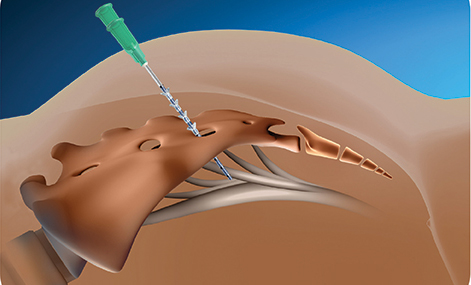
Medical illustration showing the placement of a sacral nerve stimulation lead: a needle inserts a thin electrode through the bony opening of the sacrum toward the sacral nerves, which are depicted branching beneath the surface.

SACRAL NERVE STIMULATION (SNS) is a new treatment that helps control urinary incontinence and fecal soiling. For some children, the nerves that control urination and bowel movements do not work correctly. The SNS unit consists of a small, safe battery and wire under the skin and sends signals to the sacral nerve. The signals help restore…

Acetabular “Fleck” Sign Predictive of Labral Avulsion
Acetabular “Fleck” Sign Predictive of Labral Avulsion 150 150 Abbie Miller

A “fleck” sign on the postreduction CT scan calls for high suspicion of labral pathology, even in cases of congruent closed reductions. Traumatic posterior hip dislocations and subluxations are typically treated with a closed reduction in pediatric patients. For patients who have a congruent hip reduction, the course of treatment often ends here. However, a new study…

InSight: Working Up the Nerve
InSight: Working Up the Nerve 150 150 Katie Brind'Amour, PhD, MS, CHES

Using regional anesthesia to numb nerves reduces pain and speeds recovery in pediatric orthopedic surgery. Ultrasound-guided regional anesthesia has been used in adult patients for more than a decade but is now being used more regularly in pediatric patients, especially for orthopedic procedures. Femoral nerve block, in which the femoral nerve is numbed, is among…