
Evaluating Adherence and Safety Outcomes for Neonatal UTI Diagnosis and Treatment
Evaluating Adherence and Safety Outcomes for Neonatal UTI Diagnosis and Treatment https://pediatricsnationwide.org/wp-content/uploads/2023/04/AdobeStock_214225951-1024x683.jpeg 1024 683 JoAnna Pendergrass, DVM https://pediatricsnationwide.org/wp-content/uploads/2021/03/pendergrass_01.jpg
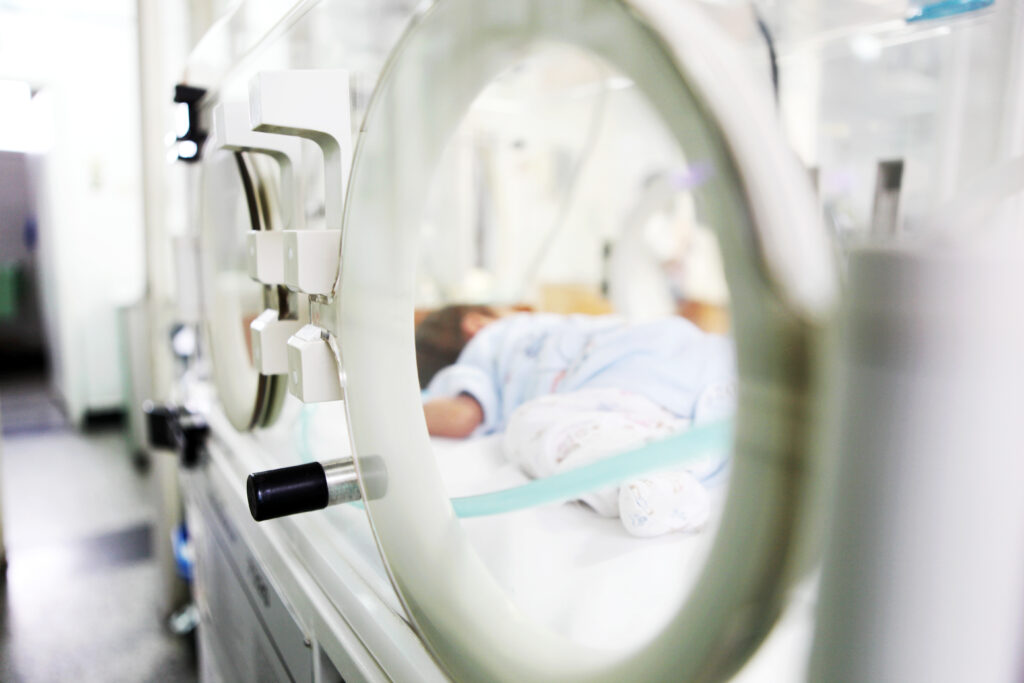
Neonates are at increased risk for developing urinary tract infections, yet a knowledge gap exists regarding defining, diagnosing and treating them in the NICU.
A study across seven Nationwide Children’s neonatal intensive care units (NICUs) reported 80% adherence to diagnostic criteria for urinary tract infection (UTI) and no safety concerns, with 90% of infants receiving a short course of antibiotics.

Pablo J. Sánchez, MD
A total of 77 NICU infants with non-bacteremic UTI were included in the study, conducted from November 2020 to December 2022. Results were published in the Journal of Perinatology.
According to study authors, several factors increase the risk of neonatal UTIs, including immunologic immaturity, urinary catheterization, urinary tract anomalies and lack of circumcision in males.
However, “The main issue is the lack of a uniform definition of UTI in the NICU,” says Pablo Sánchez, MD, study author and neonatologist and principal investigator in the Center for Perinatal Research at the Abigail Wexner Research Institute at Nationwide Children’s.
“Many NICU patients will have >100,000 colony-forming units/ml of a single organism and yet have no white blood cells in the urine,” he notes.
The American Academy of Pediatrics has diagnostic and therapeutic guidelines for UTIs in febrile patients aged 2 to 24 months, but research on neonatal UTI diagnosis and treatment is sparse.

Jacqueline K. Magers, PharmD
Jacqueline Magers, PharmD, NICU advanced patient care pharmacist at Nationwide Children’s, led a prospective surveillance study that assessed adherence and safety outcomes using the diagnostic and therapeutic guideline developed by the Nationwide Children’s Neonatal Antimicrobial Stewardship Program (NEO-ASP) in August 2019.
The research team monitored adherence to the guideline’s recommendation for a 5-day antibiotic treatment course for non-bacteremic UTI, as well as adherence to its diagnostic criteria.
Safety was evaluated according to whether antibiotic treatment needed to be restarted within 7 days after treatment discontinuation because of a recurrent UTI caused by the same organism. Only one patient had a recurrent UTI with the same organism within 7 days in the study results.
“The study’s main takeaway was that 90% of neonatologists adhered to a short course of antibiotics for uncomplicated UTIs,” says Dr. Sánchez. “This is important because reducing antibiotic use in the NICU is a constant challenge.”
The 77% adherence rate to diagnostic criteria was lower than expected, raising the question about the true diagnosis of neonatal UTI and indicating a significant knowledge gap in defining UTIs in the NICU, the researchers noted.
To follow up, Dr. Sánchez intends to conduct a randomized study comparing short- versus long-term antibiotic treatment duration for NICU UTIs.
Dr. Magers remarked that the NEO-ASP has had significant buy-in from NICU specialists, with a noticeable reduction in antibiotic use. However, she and Dr. Sánchez agree that a better diagnosis of UTIs in the NICU is still needed.
“Better diagnostic acumen for UTI in the NICU is necessary so that antibiotic therapy can be used judiciously,” explains Dr. Sánchez.
Reference
Magers J, Burton A, Prusakov P, White NO, Miller RR, Moraille R, Theile AR, Sánchez PJ, Nationwide Children’s Hospital Neonatal Antimicrobial Stewardship Program (NEO-ASP). Urinary tract infection in the neonatal intensive care unit. Journal of Perinatology. 2026;46(5):754-760. doi:10.1038/s41372-026-02690-1
Image Credits: Adobe Stock & Nationwide Children’s
About the author

JoAnna Pendergrass, DVM, is a veterinarian and freelance medical writer in Atlanta, GA. She received her veterinary degree from the Virginia-Maryland College of Veterinary Medicine and completed a 2-year postdoctoral research fellowship at Emory University’s Yerkes Primate Research Center before beginning her career as a medical writer.
As a freelance medical writer, Dr. Pendergrass focuses on pet owner education and health journalism. She is a member of the American Medical Writers Association and has served as secretary and president of AMWA’s Southeast chapter.
In her spare time, Dr. Pendergrass enjoys baking, running, and playing the viola in a local community orchestra.
- JoAnna Pendergrass, DVMhttps://pediatricsnationwide.org/author/joanna-pendergrass-dvm/

- JoAnna Pendergrass, DVMhttps://pediatricsnationwide.org/author/joanna-pendergrass-dvm/

- JoAnna Pendergrass, DVMhttps://pediatricsnationwide.org/author/joanna-pendergrass-dvm/

- JoAnna Pendergrass, DVMhttps://pediatricsnationwide.org/author/joanna-pendergrass-dvm/