
A Digital Bundle to Help Primary Care Clinicians Successfully Promote Cardiovascular Health
A Digital Bundle to Help Primary Care Clinicians Successfully Promote Cardiovascular Health https://pediatricsnationwide.org/wp-content/themes/corpus/images/empty/thumbnail.jpg 150 150 Katie Brind'Amour, PhD, MS, CHES https://pediatricsnationwide.org/wp-content/uploads/2021/03/Katie-B-portrait.gif
A web-based app that integrates into electronic record systems could offer primary care providers an evidence-based way to effectively address cardiovascular risks and behavior change with parents.
On average, physicians get a total of 4 hours of education in nutrition and behavior change counseling during medical school.
“That’s a horrible baseline,” says Amrik Singh Khalsa, MD, a dual-certified internal medicine and pediatrics physician and principal investigator at the Center for Child Health Equity and Outcomes Research in the Abigail Wexner Research Institute at Nationwide Children’s Hospital. “Patient families often come to us wanting to know how to improve their cardiovascular health and keep their child from getting a condition they have, and a lot of physicians don’t know what to say or do.”
Dr. Khalsa has a career development (K) award from the National Institutes of Health to try to change that. His latest framework for a digital communication bundle to help guide families and physicians through behavioral change appeared in the Journal of General Internal Medicine.
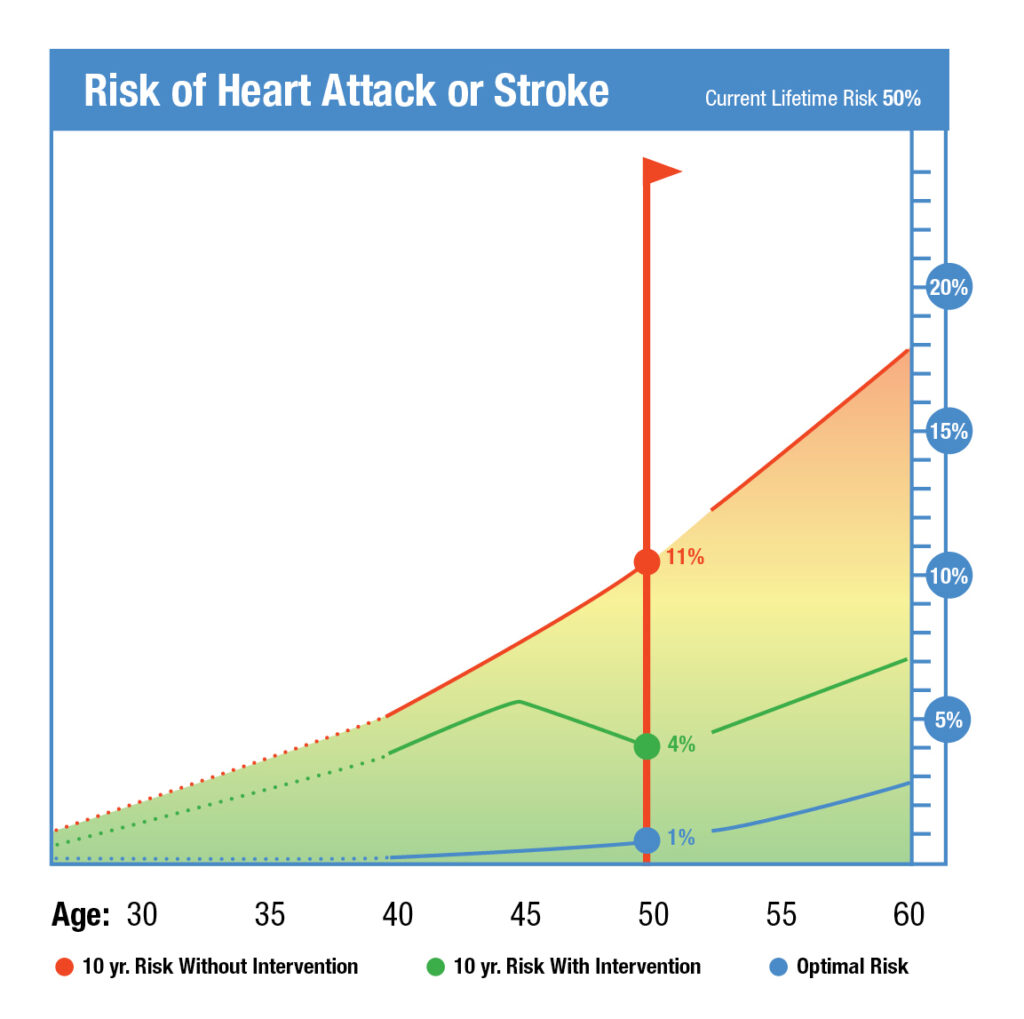
“Traditional tools often give numeric risk scores that are hard to interpret, especially for families with low health literacy,” explains Dr. Khalsa. “We need a visual way to represent their risk over time and show them where they could be if they make certain changes — we need tools to meet the patient halfway.”
Dr. Khalsa’s current iteration of the web-based application is undergoing feasibility testing with parents. It employs the five elements described in the publication: assessment of cardiovascular health status and risk factors via a brief digital survey in the waiting room; guided communication about identified risk factors in a health-literate, patient- friendly visual; clinician-directed prompts to assess the patient’s readiness to change; behavior change counseling templates to guide suggestions for identified goals; and tools for assessing and addressing barriers to change via referrals and resources.
The program can be integrated into electronic record systems, and the physician-led portion should require only 2-5 minutes of visit time. The tool could also be used by community health workers, social workers and other services outside of primary care. While current efforts are targeted at young parents bringing their children into primary care visits, the tool could easily be adapted for other settings, including pediatrics. Dr. Khalsa also expects a trickle-down effect of behavior change on behalf of the parents.
“A lot of risks are shared family behaviors, like poor diet or inactivity,” says Dr. Khalsa. “This is a long-term, patient-focused plan to promote heart health.”
He and his team have planned a preliminary trial with parents at Nationwide Children’s primary care clinics, with the goal to progress to a randomized-controlled study to evaluate engagement, self-efficacy, behavior change, follow-up and health outcomes over time.
This article appeared in the 2025 Fall/Winter print issue. Download the issue here.
Reference:
Khalsa AS, Miller CK, Rhee KE, Cho H. A proposed framework to aid primary care clinicians in promoting cardiovascular health. Journal of General Internal Medicine. 2025 Jun;40(8):1749-1754.
Image credit: Nationwide Children’s
About the author

Katherine (Katie) Brind’Amour is a freelance medical and health science writer based in Pennsylvania. She has written about nearly every therapeutic area for patients, doctors and the general public. Dr. Brind’Amour specializes in health literacy and patient education. She completed her BS and MS degrees in Biology at Arizona State University and her PhD in Health Services Management and Policy at The Ohio State University. She is a Certified Health Education Specialist and is interested in health promotion via health programs and the communication of medical information.
- Katie Brind'Amour, PhD, MS, CHEShttps://pediatricsnationwide.org/author/katie-brindamour-phd-ms-ches/

- Katie Brind'Amour, PhD, MS, CHEShttps://pediatricsnationwide.org/author/katie-brindamour-phd-ms-ches/
- Katie Brind'Amour, PhD, MS, CHEShttps://pediatricsnationwide.org/author/katie-brindamour-phd-ms-ches/
- Katie Brind'Amour, PhD, MS, CHEShttps://pediatricsnationwide.org/author/katie-brindamour-phd-ms-ches/