
Why Do Some Children Have Worse Outcomes After Moderate to Severe Traumatic Brain Injury?
Why Do Some Children Have Worse Outcomes After Moderate to Severe Traumatic Brain Injury? https://pediatricsnationwide.org/wp-content/uploads/2024/04/AdobeStock_141694591-1024x683.jpg 1024 683 Jessica Nye, PhD https://pediatricsnationwide.org/wp-content/uploads/2021/09/JNye_glasses.png

Children had reduced white matter structural connectivity after moderate to severe traumatic brain injury (TBI) relative to children with complicated-mild TBI (cmTBI) or orthopedic injury (OI). This reduced connectivity may explain some disparities in behavioral outcomes.
Children and adolescents who experience a TBI are at risk for psychological and behavioral morbidities.
“We find that kids who have very similar injury and very similar recovery can have very different outcomes,” says Kristen R. Hoskinson, PhD, principal investigator in the Center for Biobehavioral Health at the Abigail Wexner Research Institute at Nationwide Children’s Hospital. “Some kids really struggle with skills like adaptive function, making and sustaining meaningful friendships and social connections and activities of daily living¾the kind of adult skills that help you navigate the world long term.”
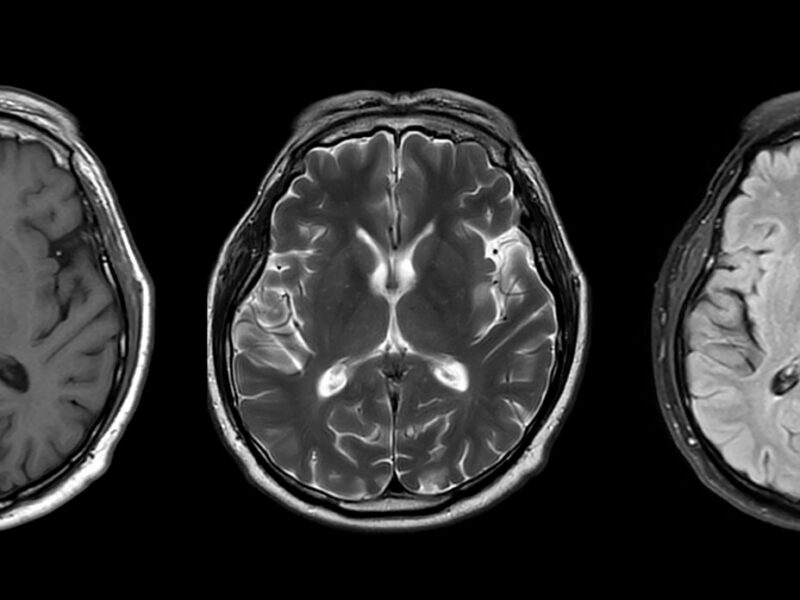
To evaluate whether changes in brain network connectivity may explain some of the variability in patient outcomes, Dr. Hoskinson and colleagues recruited patients with moderate to severe TBI (msTBI; n=16), cmTBI (n=12), and OI not involving the head (n=24) for a study published in the International Journal of Neuroscience. At least one year after injury, the participants underwent magnetic resonance imaging (MRI), and their functional outcomes were rated by parents. Structural brain connectivity was analyzed using a probabilistic tractography approach and related with behavioral outcomes.
In each group, patient were aged mean 11.36 to 12.59 years and 62.50% to 75.00% were boys.
Significant group differences in practical skills (P =.002; e2, 0.252), conceptual skills (P =.002; e2, 0.248), social skills (P =.003; e2, 0.230), social competence (P =.015; e2, 0.195), and sluggish cognitive tempo (P =.020; e2, 0.147) were observed, in which children with msTBI had worse outcomes relative to cmTBI and OI.
The MRI revealed that patients with msTBI had significantly reduced global network connectivity in the default mode network (P =.018; e2, 0.152) and connectivity tended to be reduced in the central executive network (P =.071; e2, 0.102) and basal ganglia network (P =.164; e2, 0.071) compared with cmTBI and OI.
“In some ways these behavioral findings are a replication of previous work. But if you look at the group differences in brain networks, even when they didn’t reach statistical significance for most of the networks, those effects are quite large,” says Dr. Hoskinson.
The reduction in regional brain network connectivity, specifically within the default mode network, explained 19.18% of the variance in social competence and 24.82% of the variance in practical adaptive skills.
Warren D. Lo, MD, pediatric neurologist at Nationwide Children’s, clinical professor of Pediatrics and Neurology at The Ohio State University College of Medicine, and contributing author of the study concludes, “I think this study really represents the fruit of many investigators at Nationwide Children’s. The seeds of pediatric traumatic brain injury research were planted years ago, really over the space of about 15 years. Now we’re beginning to see the potential for improving the outcomes of these patients. […] It takes a long time, it takes an infrastructure, it takes people able to collaborate to carry out this study.”
Reference:
Thomas PA, Bolton SH, Ontiveros F, Mattson WI, Vannatta K, Lo W, Wilde EA, Cunningham WA, Yeates KO, Hoskinson KR. Exploring the link among injury severity, white matter connectivity and psychosocial outcomes in pediatric TBI: a probabilistic tractography approach. Int J Neurosci. 2024:1-13.
Image credit: Adobe Stock
About the author

Jessica Nye, PhD, is a freelance science and medical writer based in Barcelona, Spain. She completed her BS in biology and chemistry and MS in evolutionary biology at Florida State University. Dr. Nye studied population genetics for her doctorate in biomedicine at University of Pompeu Fabra. She conducted her postdoctoral research on the inheritance of complex traits at the Autonomous University of Barcelona.
- Jessica Nye, PhDhttps://pediatricsnationwide.org/author/jessica-nye-phd/

- Jessica Nye, PhDhttps://pediatricsnationwide.org/author/jessica-nye-phd/

- Jessica Nye, PhDhttps://pediatricsnationwide.org/author/jessica-nye-phd/
- Jessica Nye, PhDhttps://pediatricsnationwide.org/author/jessica-nye-phd/