
Featured Researcher: Diana Zepeda-Orozco, MD
Featured Researcher: Diana Zepeda-Orozco, MD https://pediatricsnationwide.org/wp-content/themes/corpus/images/empty/thumbnail.jpg 150 150 Gina Vitale, PTA https://pediatricsnationwide.org/wp-content/uploads/2025/04/IMG_1961-cropped-Gina-profile.jpg
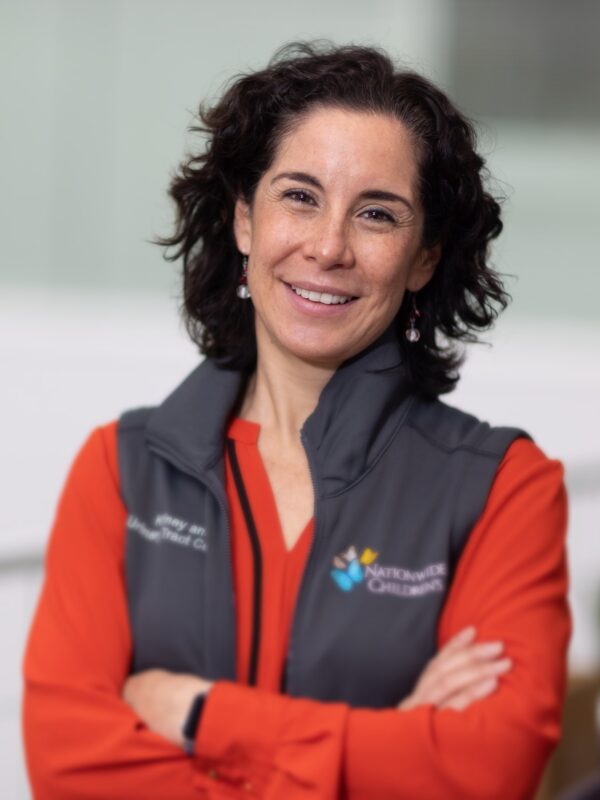
Diana Zepeda-Orozco, MD, is a principal investigator in the Kidney and Urinary Tract Research Center within the Abigail Wexner Research Institute, an attending physician and the associate division chief of research for the Division of Pediatric Nephrology and Hypertension, and an associate professor of pediatrics at The Ohio State University College of Medicine.
Dr. Zepeda-Orozco is a physician-scientist who thrives being part of a unique and versatile team. In having an affinity for multiple aspects of science, she chose to specialize in pediatric nephrology. Dr. Zepeda-Orozco is involved in various research and quality improvement projects and is dedicated to developing novel diagnostic approaches that will facilitate targeted treatment for kidney injury. Continue reading to learn about this impressive, yet affable, physician-scientist who genuinely loves her work.
Read on to learn more about Dr. Zepeda-Orozco’s work and research career.
How did you land in your field?
When I was in residency, I liked nephrology because it combined physiology, pathology and immunology. I found pediatric nephrology an interesting subspecialty and enjoyed caring for this diverse patient population. It’s inspiring to see how the kids overcome the challenges, which made it an easy choice.
I also enjoy collaborating with a team, and nephrology is a subspecialty where we work closely with the ICUs, oncologists, primary care physicians and our nurses who manage these kidney support therapies. Pediatric nephrology is a specialty that involves providing lifestyle modifications, recommendations to patients, and nutrition education, so our team also includes social workers and nutritionists. It’s inspiring to be working by their side. I’m a small part of a big project, and I keep learning from everyone I work with – it’s fun.
Why did you decide to pursue your work at Nationwide Children’s?
What first drove me to Nationwide Children’s was the nephrology team. In nephrology, at least in my division, there are nephrologists at all stages of their career, and from diverse backgrounds who get along. That was the first reason I considered attending the interview. When I arrived for the interview, I was very impressed by the group. The team included physician scientists doing primarily research like me, outstanding clinicians, nurses, nutritionists, administrative support and social workers who were committed to our patients and to each other.
I’m very passionate about research because I can make an impact on my patients towards the greater good, not only as a physician, but through research too. There is something special about the combination of clinical care and research. During my interview, I noticed that the division of pediatric nephrology was committed to being leaders in both research and clinical care, and there was strong institutional support, making my decision to join Nationwide Children’s Hospital very easy.
Once I started working at Nationwide Children’s, I was inspired by this mission-driven team, working towards doing the right things. I always tell myself that there is no perfect institution. However, if the institution is true to its values, open to making changes based on feedback, utilizes the team’s expertise, and strives to improve, that is a place that you want to be.
How does your research serve our patients and our community?
What I’m particularly passionate about is reducing the likelihood of complications in patients’ kidneys that could impact their short-term and long-term health. When I work with oncologists, ICU providers, or other pediatric specialists, I always want to help them be more kidney-friendly without compromising their treatments. Collaboration introduces different points of view. For example, what if we examine this other approach? Would it be more kidney-friendly and still allow you to treat their primary illness? At the end of the day, we want to treat the kids’ primary illness, but we don’t want that kidney complications get in the way of their acute treatment, and we don’t want the kids to have long-term kidney problems.
When working with other teams, we ask ourselves:
Fun Facts About Dr. Zepeda-Orozco
What would be your dream job if you didn’t work in research?
I tell people I have my dream job because I believe a dream job is something inspiring and that you enjoy, and that has meaning to you. If not in research, it would be related to patient care, because I don’t see myself doing anything else.
What’s your favorite food?
I was born in Mexico, and I put everything in a corn tortilla! I love tacos.
Favorite band/music?
I don’t have a specific band, but I like salsa music.
What fictional character would you most like to meet and why?
Hermione Granger from Harry Potter. She is introduced as a child who is insecure and a little annoying, but brilliant, hardworking, curious, adventurous, loyal, loving, and principled. She always takes opportunities and risks as long as they align with her values. You can see how her confidence grows as she gets older and becomes more powerful. However, she always stays true to her values.
What’s your favorite word, and why?
Serendipity, because I believe that sometimes things happen by chance, and you have that opportunity — it was just crossing, and then you can either ignore it and look the other way or pay attention to it. Sometimes, when you pay attention, it takes you to this happy conclusion. Many of the things that have happened in my career and in my life have been serendipitous. Something that happened that I just couldn’t ignore. Every time I made a choice, I didn’t regret it. It’s something that I truly believe.
Were there preventable kidney complications, or is there a way of reducing the likelihood of their happening? Then I work with the team to find ways to reduce the likelihood of a kid having both acute and long-term kidney complications without compromising the treatment of their primary illness.
Were there kidney complications that you couldn’t prevent? We know some of them are not preventable because the kids are sick, and their kidneys are very sensitive. Then I work with the team to find ways to ensure we can support these kids early and help as much as we can to overcome that acute insult to the kidney. Early supportive care really can help kids tolerate their treatments.
The majority of my research and quality improvement work is in the hospital acute setting, but now I’m starting to get involved in projects to follow up kids after they have already had acute kidney complications. A real challenge is finding who the kids are who really need to see a nephrologist in the outpatient clinic. I really would like to provide guidance to subspecialists or primary care providers about who needs to see me.
Moving forward, I’m trying to find how to prevent kidney injury when it’s preventable, but if it’s not, I’m trying to find ways of identifying kidney injury early and reducing the complications of the kidney injury in the acute setting. Then, in the follow-up, I want to determine who really needs to see me so I can prevent any more long-term kidney complications. I’m hopeful that in the future, with research, we will have new tools and therapies to help treat acute kidney injury and prevent long-term kidney complications.
About the author
Gina is a licensed physical therapist assistant with 30 years of direct patient care experience treating all ages in outpatient orthopedics and sports medicine rehabilitation, and post-acute home health care settings. Having a background as a competitive gymnast, and the injuries that accompany sport spurred her into a career in physical therapy and rehabilitation. She is also a certified mat Pilates instructor.
Gina began health content writing in 2021 focusing on informational writing such as blogs, web pages and articles for health care, health and wellness businesses and publications. She believes educating everyone about evidence-based health and wellness is essential to improving health awareness and quality of life.
- Gina Vitale, PTAhttps://pediatricsnationwide.org/author/gina-vitale-pta/

- Gina Vitale, PTAhttps://pediatricsnationwide.org/author/gina-vitale-pta/
- Gina Vitale, PTAhttps://pediatricsnationwide.org/author/gina-vitale-pta/
- Gina Vitale, PTAhttps://pediatricsnationwide.org/author/gina-vitale-pta/