
Prematurity Increases Morbidity and Mortality Risk in Preterm Neonates with Down Syndrome in the NICU
Prematurity Increases Morbidity and Mortality Risk in Preterm Neonates with Down Syndrome in the NICU https://pediatricsnationwide.org/wp-content/uploads/2023/04/AdobeStock_53939020-1024x624.jpg 1024 624 JoAnna Pendergrass, DVM https://pediatricsnationwide.org/wp-content/uploads/2021/03/pendergrass_01.jpg

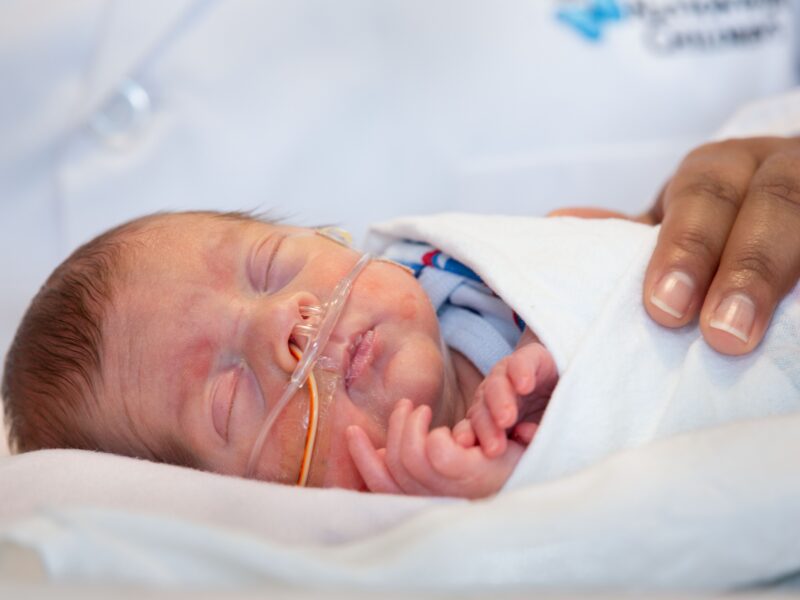
Premature neonates with Down syndrome who are admitted to the neonatal intensive care unit experience higher rates of health complications and an increased mortality risk.
A retrospective study led by Emily Messick, DO, at Nationwide Children’s Hospital, reported the increased risk of adverse health outcomes in preterm neonates with Down syndrome in the neonatal intensive care unit (NICU), a subpopulation of neonates that has not been extensively studied.
“Although Down syndrome is the most common chromosomal condition, it remains relatively uncommon overall,” explains Dr. Messick, a fellow in the Division of Neonatology at Nationwide Children’s.
“Research attention has often centered on either prematurity or congenital heart disease in neonates with Down syndrome, but not both together,” she adds.
Additionally, given the small sample sizes when neonates with Down syndrome are categorized by gestational age, large databases are often required to increase the sample size enough to obtain meaningful data. These large databases, however, may miss subtle clinical details, Dr. Messick says.
Dr. Messick and her research team sought to evaluate the intersection of prematurity and health outcomes in neonates with Down syndrome. Results were published in the Journal of Perinatology.
Using the Pediatric Health Information System (PHIS) database, the researchers analyzed the data of approximately 7,000 neonates with Down syndrome who were admitted to the NICU at less than 30 days of age from January 1, 2008, to December 31, 2022.
Gestational age was categorized according to the World Health Organization standards:
- < 28 weeks: Extremely preterm
- 28 to 31 weeks: Very preterm
- 32 to 36 weeks: Moderate/late term
- ≥ 37 weeks: Term
Diagnoses recorded in the database included pulmonary hypertension, ventricular septal defect and hydrops. In-hospital medical interventions included any central line, total parenteral nutrition and nitric oxide.
Dr. Messick notes several key takeaways from the study. She says, “Our study found that mortality increased with decreasing gestational age among neonates with Down syndrome, ranging from +6% for moderate/late preterm to +37% for extremely preterm.”
In addition, neonates with Down syndrome in the NICU experienced more adverse health outcomes and required more intensive medical intervention. Adverse health outcomes included necrotizing enterocolitis, while medical interventions included central lines and mechanical ventilation.
Several complications, such as pulmonary hypertension, were common across gestational ages, suggesting that these complications were associated more with Down syndrome than with prematurity.
Regarding the PHIS database, a lack of detailed clinical information was a limiting factor, but its large size allowed for examination of trends in this specific population.
“Large administrative datasets are invaluable for identifying patterns but may overrepresent medically complex infants, necessitating individualized clinical assessments,” Dr. Messick adds.
Dr. Messick’s future research plans include examining health outcomes in neonates with Down syndrome after discharge from the NICU and evaluating structured care pathways to determine if activities such as coordinated discharge planning can help decrease readmissions and caregiver stress.
She emphasizes the importance of providing comprehensive support for caregivers (e.g., early intervention referrals), as well as gestational age-specific counseling that combines education about Down syndrome in general and the additional risks of prematurity for infants with Down syndrome.
“Parents of preterm neonates with Down syndrome often experience overlapping emotional, financial and logistical stressors related to both prematurity and the Down syndrome diagnosis,” she explains. Comprehensive support should emcompass psychosocial services, financial support and early intervention referrals.
Reference
Messick EA, Hart SA, Strominger J, Conroy S, Backes CH, Cua CL. Gestational age-based outcomes of neonates with Down syndrome in the neonatal intensive care unit (NICU): review of pediatric health information system (PHIS) database. Journal of Perinatology. 2025 Aug 12.
Image credit: Adobe Stock
About the author

JoAnna Pendergrass, DVM, is a veterinarian and freelance medical writer in Atlanta, GA. She received her veterinary degree from the Virginia-Maryland College of Veterinary Medicine and completed a 2-year postdoctoral research fellowship at Emory University’s Yerkes Primate Research Center before beginning her career as a medical writer.
As a freelance medical writer, Dr. Pendergrass focuses on pet owner education and health journalism. She is a member of the American Medical Writers Association and has served as secretary and president of AMWA’s Southeast chapter.
In her spare time, Dr. Pendergrass enjoys baking, running, and playing the viola in a local community orchestra.
- JoAnna Pendergrass, DVMhttps://pediatricsnationwide.org/author/joanna-pendergrass-dvm/

- JoAnna Pendergrass, DVMhttps://pediatricsnationwide.org/author/joanna-pendergrass-dvm/

- JoAnna Pendergrass, DVMhttps://pediatricsnationwide.org/author/joanna-pendergrass-dvm/

- JoAnna Pendergrass, DVMhttps://pediatricsnationwide.org/author/joanna-pendergrass-dvm/