
The Kelly Procedure: A Groundbreaking Approach to Treating Bladder Exstrophy
The Kelly Procedure: A Groundbreaking Approach to Treating Bladder Exstrophy https://pediatricsnationwide.org/wp-content/themes/corpus/images/empty/thumbnail.jpg 150 150 Alaina Doklovic https://pediatricsnationwide.org/wp-content/uploads/2023/11/100923RH0019-e1699635391623.jpg

The Kelly Procedure, part of a revolutionary two-step approach to treat bladder exstrophy, provides continence quicker, improves outcomes and shortens recovery.
Bladder exstrophy is a rare and complex condition that occurs in approximately one in 10,000 to 50,000 births. With this condition, the bladder develops outside the body, leaving children incontinent and requiring surgical intervention to restore urinary function. Traditional treatments often involve multiple reconstructive surgeries, including pelvic osteotomy, a procedure to reshape pelvic bones. This often results in lengthy hospital stays, sometimes up to two months, and extended recovery times.
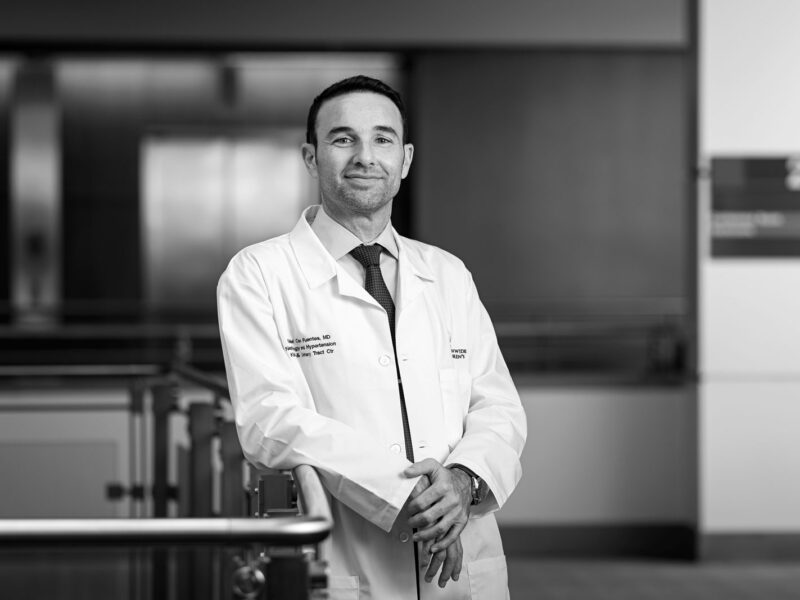
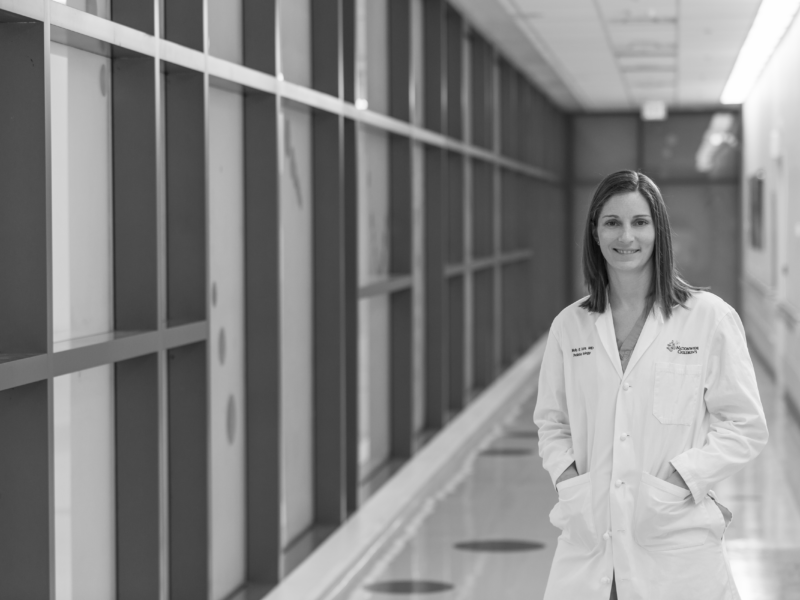
At Nationwide Children’s Hospital, a groundbreaking alternative is changing the landscape of bladder exstrophy care, led by Rama Jayanthi, MD, pediatric urologist and former chief of Pediatric Urology at Nationwide Children’s, and Peter Cuckow, MB, BS, FRCS, an attending urologist at Nationwide Children’s and a renowned exstrophy expert with decades of experience in the United Kingdom.
The Kelly procedure, also known as radical soft tissue mobilization, is an innovative approach focusing on soft tissue reconstruction to provide continence in patients with bladder exstrophy. This approach is less invasive, leading to shorter inpatients stays and more time at home.
“The Kelly procedure as it is offered here at Nationwide Children’s is a modification of the original Kelly procedure, which was developed by renowned Australian pediatric surgeon Justin Kelly,” says Dr. Jayanthi. “Our modified procedure includes a radical rearrangement of the pelvic soft tissues that includes full mobilization of the corporal bodies. It leads to a more advantageous location of the bladder neck along with a more normal vesicourethral angle, where the bladder and urethra connect. This results in higher continence levels compared to other procedures and allows for maximal penile length.”
To achieve the results Drs. Cuckow and Jayanthi are aiming for, they use a two-step approach.
Primary Closure and the Two-Step Approach
While bladder exstrophy is a complex condition, it is not an emergency.
“Most kids in the United States are not closed emergently anymore,” says Dr. Jayanthi. “The babies should be at home with their families. Newborn bonding is extremely important. There truly is no rush to do anything in most cases.”
When deemed appropriate, treatment begins with a primary closure, typically performed between two weeks and three months of age. This initial surgery places the exposed bladder back inside the abdomen. Within one week, the child can go home. Unlike traditional methods, this step does not require osteotomies, external fixators or casts, so hospitalization is much shorter than in traditional approaches.
The second stage — the Kelly procedure — usually occurs at 15 to 18 months of age. This surgery reconstructs the bladder neck using the child’s own muscle and soft tissue to create a functional sphincter. By mobilizing and wrapping these tissues around the bladder outlet, surgeons enable the bladder to hold urine and develop capacity over time. For boys, the procedure may also include penile reconstruction.
What Makes the Nationwide Children’s Approach Different?
Our two-step approach stands out for several reasons:
- No osteotomy required: Unlike traditional complete repair methods, the Kelly approach eliminates the need for pelvic bone cutting or reshaping, reducing surgical complexity and recovery time. In the Kelly procedure, the corporal bodies, or tissue, are separated from the pubic bones. Then, the bladder neck is reconstructed using the patient’s own muscle and soft tissue to create a functional sphincter. The Kelly approach furthermore maximizes the amount of visible penis – Nationwide Children’s internal data shows the measurable penile length after the Kelly nearly doubles.
- Shorter hospital stays: Children typically remain in the hospital for only 5-7 days, after primary closure and 7-10 days after the Kelly procedure.
- Improved continence outcomes: According to Drs. Jayanthi and Cuckow, over half of children achieve daytime dryness within three to five years post-surgery, rising to 75% after 10 years. Most patients require no major surgeries beyond the Kelly procedure.
- Child-centered philosophy: These patients are children first; they are not defined by their diagnosis. The goal is to restore normal function and allow them to live full, independent lives.
The Kelly procedure, with improved outcomes, shorter hospital stays, and a child-centered approach, returns the power back to the patient and their family, creating a collaborative approach that empowers families to make decisions with clarity and trust.
“With bladder exstrophy, there is a partnership between the patient family and the doctors. We want families to be independent. We want resilient, powerful parents. The Kelly procedure allows us to do our job, and create an environment where parents feel confident in caring for their child with bladder exstrophy,” says Dr. Cuckow.
Training the Next Generation
According to Drs. Jayanthi and Cuckow, training is more than just surgery and technical skills. Surgeons must have an intrinsic motivation to work with children with bladder exstrophy.
“Imparting the deeper passion for these patients, especially in specialized fields such as pediatric urology, is the goal,” says Dr. Jayanthi. “We want to train those who will dedicate their lives to do even better than whatever we have done.”
While teaching technical skills and surgical excellence is always a priority in The Bladder Exstrophy Program at Nationwide Children’s, training the next generation is about more than that. It’s about cultivating genuine passion and commitment to motivated individuals.
An ideal candidate goes beyond casual interest, because this is not a casual disease or a casual procedure, says Dr. Cuckow. “It is our job to invite interested individuals to observe and learn, to create educational resources and develop partnership opportunities with other professionals.”
Leadership in Care
Nationwide Children’s is the only hospital in the United States offering the Kelly procedure as part of a large-volume program, led by internationally recognized experts. This approach reflects a commitment to innovation and collaboration, ensuring that families receive world-class care without unnecessary interventions.
“Our hope is that children treated with this method will grow up to forget us,” says Dr. Cuckow “That’s when we know we’ve done our job.”
For families navigating bladder exstrophy, the Kelly procedure offers not just a surgical solution — but a pathway to a brighter, more normal future.
Image Credits: Nationwide Children’s
About the author

Alaina Doklovic is a Marketing Specialist for Research Communications at Nationwide Children’s Hospital. She received her BS in medical anthropology and English from The Ohio State University. Her passions for science and health, combined with her desire to help others, motivated her to pursue a career in which she could actively help improve patient outcomes and scientific research through writing.
- Alaina Doklovichttps://pediatricsnationwide.org/author/alaina-doklovic/

- Alaina Doklovichttps://pediatricsnationwide.org/author/alaina-doklovic/
- Alaina Doklovichttps://pediatricsnationwide.org/author/alaina-doklovic/
- Alaina Doklovichttps://pediatricsnationwide.org/author/alaina-doklovic/